Affenpinscher
The Monkey-Faced Mouser
By BreedGuessr · Dog breed learning game maintainers · Published · Updated
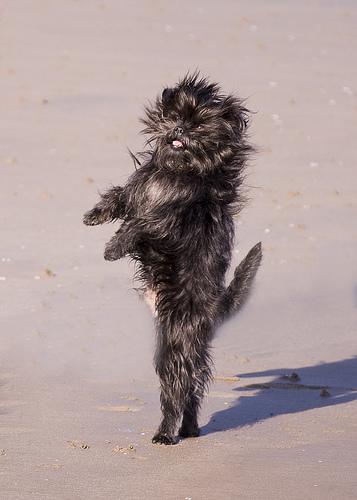
What is the Affenpinscher?
The Affenpinscher is a dog breed from Germany, since ~1600 with about 9.5-11.5 inches tall, about 6.5-13 lbs, a harsh, wiry, black (or grey, red, beige) coat, and a typical lifespan of 9.3 years.
Germany, since ~1600
9.3 years
6.5-13 lbs
9.5-11.5 inches
Harsh, wiry, black (or grey, red, beige)
Monkey-like expression with shaggy mane
What is the Affenpinscher temperament?
Don't let their toy-dog size fool you—Affenpinschers are bold, feisty companions with outsized personalities.
These clever little dogs are alert and curious, making them excellent watchdogs despite their diminutive frame. They're affectionate with their families but can be stubborn and independent-minded, preferring to do things their own way. Playful and sometimes mischievous, they thrive on attention and entertainment, though they can be reserved or even defensive around strangers.
Where did the Affenpinscher come from?
The Affenpinscher emerged in Germany around 1600, originally bred to catch rats in homes, kitchens, granaries, and stables.
The breed's name comes from the German word 'affe' (monkey), referring to their characteristic monkey-like facial expression. Early breeders crossed schnauzers, pinschers, pugs, and other breeds to create the ideal mouser and companion. The breed was officially recognized by the AKC in 1935 and the FCI in 1955, and gained international fame when Banana Joe V Tani Kazari won Best in Show at the 2013 Westminster Kennel Club Dog Show.
What health and care needs does the Affenpinscher have?
Affenpinschers have a shorter life expectancy than average, with studies showing 9.3 years compared to 12.7 for purebreeds overall.
The breed is prone to hip dysplasia, collapsed trachea, and luxating patella (knee issues), common problems in small dogs. Some individuals experience fractures, respiratory problems in heat, and eye conditions like cataracts; syringomyelia is an emerging health concern.
Which breeds look similar to the Affenpinscher?
The Affenpinscher is useful to compare with Miniature Pinscher, Afghan Hound, African Hunting Dog, and Airedale when practicing similar breed recognition.
How hard is the Affenpinscher to recognize in BreedGuessr?
The Affenpinscher gets easier to recognize in BreedGuessr when players focus on its Germany, since ~1600 origin, harsh, wiry, black (or grey, red, beige) coat, and 9.5-11.5 inches outline before choosing an answer.
BreedGuessr reinforces those clues with real dog photos, multiple-choice comparisons, and quick links back to breed guides before you play another round.
What makes the Affenpinscher memorable?
A memorable Affenpinscher fact is this: The larger ancestral size of Affenpinschers, approximately 13 inches tall, is now completely extinct.
- The larger ancestral size of Affenpinschers, approximately 13 inches tall, is now completely extinct.
- Banana Joe, an Affenpinscher, became the first toy breed to win Best in Show at Westminster in nearly a decade in 2013.
- The Affenpinscher is ancestral to both the Brussels Griffon and the Miniature Schnauzer.
- Their harsh, wiry coat becomes softer and fluffier when clipped, allowing owners to change their shaggy appearance.
- Originally kept as carriage dogs and stable dogs, Affenpinschers were prized as talented ratters in medieval Europe.
- Female Affenpinschers are more prone to seasonal flank alopecia, a condition affecting their coat during certain times of year.
Source: Wikipedia. Image: Wikimedia Commons (CC BY-SA 3.0)