Beagle
The Pocket-Sized Scent Hound
By BreedGuessr · Dog breed learning game maintainers · Published · Updated
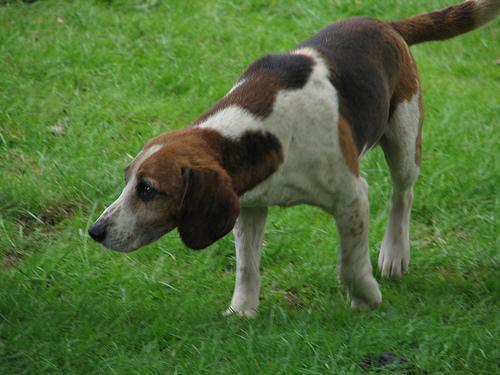
What is the Beagle?
The Beagle is a dog breed from Great Britain, 1830s with about 13 inches (at shoulder) tall, about 20-30 lbs, a short, dense, weather-resistant coat, and a typical lifespan of 12-15 years.
Great Britain, 1830s
12-15 years
13 inches (at shoulder)
20-30 lbs
Short, dense, weather-resistant
Curious, friendly, determined
What is the Beagle temperament?
Beagles are charming, curious dogs with an irrepressible love of adventure.
Their amiable nature makes them excellent family pets, though their strong prey drive and exceptional nose often lead them to follow scents with single-minded determination. Pack hunters at heart, they thrive on companionship and social interaction, but their independent streak means they need patient, consistent training. Despite their small size, Beagles have big personalities and boundless energy that keeps households lively and entertained.
Where did the Beagle come from?
The modern Beagle was developed in Great Britain during the 1830s by Reverend Phillip Honeywood, who established a foundational pack in Essex that likely crossed North Country Beagles and Southern Hounds with possibly Harriers.
The breed's roots trace back to medieval hunting dogs, including those brought by William the Conqueror in the 11th century. Miniature hunting companions were particularly popular during the Tudor era—Queen Elizabeth I kept "Pocket Beagles" small enough to fit in saddlebags, which she affectionately called her "singing Beagles." By the 19th century, Beagles had become renowned for their exceptional scenting abilities and were favored by British nobility, gaining further prestige through royal patronage.
What health and care needs does the Beagle have?
Beagles are generally hardy dogs but are prone to weight gain due to their food-motivated nature, which can lead to obesity-related health issues.
Ear infections are common because of their long, floppy ears that trap moisture and debris. Epilepsy and hypothyroidism have been documented in the breed, and responsible breeders screen for hip dysplasia. Regular exercise, a monitored diet, and consistent ear cleaning help prevent most common health problems.
Which breeds look similar to the Beagle?
The Beagle is useful to compare with Afghan Hound, Black-and-tan Coonhound, Bloodhound, and Bluetick when practicing similar breed recognition.
How hard is the Beagle to recognize in BreedGuessr?
The Beagle gets easier to recognize in BreedGuessr when players focus on its Great Britain, 1830s origin, short, dense, weather-resistant coat, and 13 inches (at shoulder) outline before choosing an answer.
BreedGuessr reinforces those clues with real dog photos, multiple-choice comparisons, and quick links back to breed guides before you play another round.
What makes the Beagle memorable?
A memorable Beagle fact is this: Beagles were so small in Tudor times that Queen Elizabeth I's Pocket Beagles could literally fit inside a saddle bag during royal hunts.
- Beagles were so small in Tudor times that Queen Elizabeth I's Pocket Beagles could literally fit inside a saddle bag during royal hunts.
- The breed's exceptional sense of smell makes them the primary detection dogs for prohibited agricultural imports and quarantined foodstuffs at airports worldwide.
- Historical Glove Beagles were named because they were small enough to sit on a falconer's glove—tiny enough for royalty to show off at dinner parties.
- Beagles are notorious escape artists and will follow their noses under, over, or through almost any obstacle when they catch an interesting scent.
- The breed's melodious howl earned them the nickname 'singing Beagles' among Queen Elizabeth I's court.
- Modern Beagles descended from the deliberate 1830s breeding of the slow-but-keen Southern Hound with the faster North Country Beagle to create the perfect hunting partner.
Source: Wikipedia. Image: Wikimedia Commons (CC BY-SA 3.0)