Bedlington Terrier
The Lamb-Like Terrier
By BreedGuessr · Dog breed learning game maintainers · Published · Updated
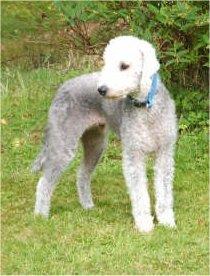
What is the Bedlington Terrier?
The Bedlington Terrier is a dog breed from Bedlington, Northumberland, England (1825) with about 15-16 inches tall, about 17-23 lbs, and a typical lifespan of 14-16 years.
Bedlington, Northumberland, England (1825)
14-16 years
15-16 inches
17-23 lbs
Soft, linty, nonshedding
Blue, liver, or sandy with tan points
What is the Bedlington Terrier temperament?
Bedlington Terriers are spirited, athletic dogs with a paradoxical nature—they combine the tenacity of a working terrier with the grace and speed of a sighthound.
These versatile companions are quick, enduring, and surprisingly affectionate, yet maintain an independent streak. They excel in water and snow, displaying remarkable swimming ability and husky-like agility on ice. Despite their powerful hunting instincts, they make devoted family pets who form strong bonds with their people.
Where did the Bedlington Terrier come from?
Originally known as the Rothbury or Rodbury Terrier, the breed was renamed Bedlington Terrier in 1825 after the English mining town where it was developed.
While documented pedigrees trace back to 1782, the breed gained formal recognition with its first dedicated show class in 1870 at Bedlington. The breed achieved ultimate validation when Rock Ridge Night Rocket won Best in Show at Westminster in 1948, cementing the Bedlington's place among premier show dogs.
What health and care needs does the Bedlington Terrier have?
Bedlington Terriers have a notably high incidence of copper toxicosis, a metabolic disorder requiring monitoring and dietary management.
Regular grooming is essential not just for appearance but for coat and ear health. Prospective owners should source from reputable breeders who screen for hereditary health conditions and maintain proper nutrition to prevent copper accumulation.
Which breeds look similar to the Bedlington Terrier?
The Bedlington Terrier is useful to compare with Airedale, American Staffordshire Terrier, Australian Terrier, and Border Terrier when practicing similar breed recognition.
How hard is the Bedlington Terrier to recognize in BreedGuessr?
The Bedlington Terrier gets easier to recognize in BreedGuessr when players focus on its Bedlington, Northumberland, England (1825) origin and 15-16 inches outline before choosing an answer.
BreedGuessr reinforces those clues with real dog photos, multiple-choice comparisons, and quick links back to breed guides before you play another round.
What makes the Bedlington Terrier memorable?
A memorable Bedlington Terrier fact is this: Bedlington puppies are born dark but lighten dramatically as they age due to the greying gene, sometimes appearing like different dogs entirely.
- Bedlington puppies are born dark but lighten dramatically as they age due to the greying gene, sometimes appearing like different dogs entirely.
- Their distinctive top knot and overall appearance earned them the nickname 'the lamb-like terrier' from admirers.
- They have powerful swimming abilities rivaling water breeds like Newfoundlands, making them exceptional water sport competitors.
- Early show Bedlingtons were sometimes dyed to enhance their appearance, a practice that would be unthinkable in modern competitions.
- Their nonshedding coat earns them hypoallergenic status similar to Poodles, though they require professional grooming costing hundreds annually.
- They can achieve husky-like speeds on ice and snow, using their powerful noses as a plough to navigate deep powder.
Source: Wikipedia. Image: Wikimedia Commons (CC BY-SA 3.0)