Bloodhound
The Master Tracker
By BreedGuessr · Dog breed learning game maintainers · Published · Updated
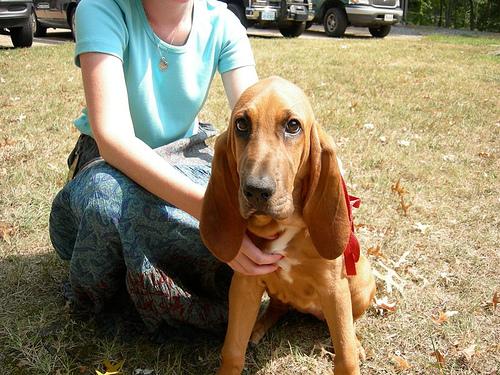
What is the Bloodhound?
The Bloodhound is a dog breed from Belgium (Abbey of Saint-Hubert) with about 58–70 cm (23–27 inches) tall, about 36–72 kg (80–160 lbs), a hard, short fur; black, liver, or red coat, and a typical lifespan of 10–12 years.
Belgium (Abbey of Saint-Hubert)
36–72 kg (80–160 lbs)
58–70 cm (23–27 inches)
Hard, short fur; black, liver, or red
10–12 years
Scent tracking over great distances
What is the Bloodhound temperament?
Bloodhounds are gentle, affectionate giants with an unwavering dedication to following a scent.
Their tireless tracking instinct makes them unstoppable once they've caught a whiff, though this same determination can make them stubborn during obedience training and walks. Despite their single-minded focus on scent, they're known for their even-tempered nature and make excellent family companions. Their strength and independence require a confident handler, but their affectionate loyalty to their people is undeniable.
Where did the Bloodhound come from?
Bloodhounds trace their lineage to hounds kept at the Abbey of Saint-Hubert in Belgium dating back to the Middle Ages, where they were originally developed for hunting deer and wild boar.
From their European origins, they evolved into specialized tracking dogs, eventually becoming the go-to breed for law enforcement agencies worldwide. Their legendary scenting ability and reliability led to their widespread adoption by police forces for tracking escaped prisoners and locating missing persons, cementing their role as the gold standard in detection work.
What health and care needs does the Bloodhound have?
Bloodhounds suffer from an unusually high rate of gastrointestinal ailments compared to other purebred dogs, making careful diet management important for their health.
Hip dysplasia and ear infections are also common concerns due to their large frame and long, floppy ears that trap moisture and debris. Regular ear cleaning and monitoring digestive health are essential parts of responsible Bloodhound ownership.
Which breeds look similar to the Bloodhound?
The Bloodhound is useful to compare with Afghan Hound, Beagle, Black-and-tan Coonhound, and Bluetick when practicing similar breed recognition.
How hard is the Bloodhound to recognize in BreedGuessr?
The Bloodhound gets easier to recognize in BreedGuessr when players focus on its Belgium (Abbey of Saint-Hubert) origin, hard, short fur; black, liver, or red coat, and 58–70 cm (23–27 inches) outline before choosing an answer.
BreedGuessr reinforces those clues with real dog photos, multiple-choice comparisons, and quick links back to breed guides before you play another round.
What makes the Bloodhound memorable?
A memorable Bloodhound fact is this: Bloodhounds can follow a scent trail that is over 300 hours old, making them invaluable to law enforcement agencies worldwide.
- Bloodhounds can follow a scent trail that is over 300 hours old, making them invaluable to law enforcement agencies worldwide.
- Their sense of smell is so powerful they can track a person through water and across multiple miles of diverse terrain.
- The breed's name may come from their status as the original 'blooded' or purebred hound, not from any association with blood tracking.
- A Bloodhound's ears contain around 20 times more scent receptors than a human's entire nose due to their unique ear structure that traps scent particles.
- Despite their formidable tracking abilities, Bloodhounds are notoriously difficult to control on a leash once they've picked up an interesting scent.
- In the United States, bloodhound evidence has been admitted in court cases, and their tracking work has helped solve numerous criminal cases.
Source: Wikipedia. Image: Wikimedia Commons (CC BY-SA 3.0)