Border Collie
The Genius Herding Dog
By BreedGuessr · Dog breed learning game maintainers · Published · Updated
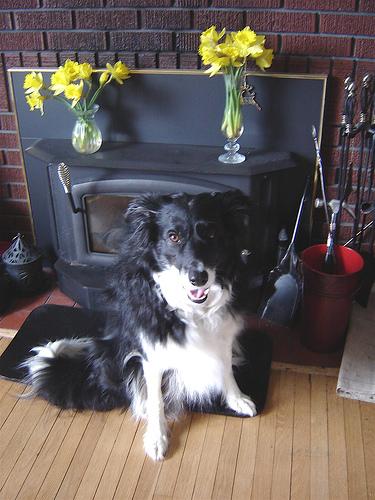
What is the Border Collie?
The Border Collie is a dog breed from Anglo-Scottish Border Region with about 18-22 inches tall, about 30-55 lbs, a double coat, feathered coat, and a typical lifespan of 12-15 years.
Anglo-Scottish Border Region
12-15 years
Medium
30-55 lbs
18-22 inches
Double coat, feathered
What is the Border Collie temperament?
Border Collies are widely considered the most intelligent dog breed, with an intense focus and unmatched work ethic that makes them exceptional problem-solvers.
They possess an almost hypnotic herding instinct, using their famous "eye"—a fixed stare that captivates livestock—to control movement with precision. Highly sensitive and responsive to their handler's commands, they thrive on mental stimulation and physical activity, becoming restless and destructive without sufficient engagement. These dogs form deep bonds with their families and excel in training, but their intelligence means they need experienced owners who can channel their boundless energy into purposeful work or competitive dog sports.
Where did the Border Collie come from?
The Border Collie descends from landrace collies that were widespread throughout the British Isles, with the breed's name derived from its origin along the Anglo-Scottish border where shepherds developed these exceptional working dogs.
The term "border collie" was officially coined in 1915 by James Reid of the International Sheep Dog Society to distinguish working dogs from the show-ring Collie breed that had developed separately since the 1860s. Old Hemp, born in Northumberland in 1893, became the foundational ancestor of the modern breed—a quiet, powerful dog whose working style revolutionized herding technique and whose bloodline can be traced through virtually every purebred Border Collie alive today. The breed spread internationally in the late 1800s when dogs like Hindhope Jed were imported to New Zealand and Australia, where they became legendary working dogs on sheep stations.
What health and care needs does the Border Collie have?
Border Collies are generally hardy and healthy dogs with few breed-specific health concerns, though hip dysplasia and eye conditions like progressive retinal atrophy can occur.
Their intense drive to work means they require careful monitoring for injuries and heat stress, particularly during strenuous activity. Regular exercise, mental stimulation, and preventive veterinary care are essential for maintaining their physical and psychological well-being.
Which breeds look similar to the Border Collie?
The Border Collie is useful to compare with Collie, Affenpinscher, Afghan Hound, and African Hunting Dog when practicing similar breed recognition.
How hard is the Border Collie to recognize in BreedGuessr?
The Border Collie gets easier to recognize in BreedGuessr when players focus on its Anglo-Scottish Border Region origin, double coat, feathered coat, and 18-22 inches outline before choosing an answer.
BreedGuessr reinforces those clues with real dog photos, multiple-choice comparisons, and quick links back to breed guides before you play another round.
What makes the Border Collie memorable?
A memorable Border Collie fact is this: All modern purebred Border Collies can trace their ancestry back to Old Hemp, a single dog born in 1893 who is believed to have sired approximately 200 puppies.
- All modern purebred Border Collies can trace their ancestry back to Old Hemp, a single dog born in 1893 who is believed to have sired approximately 200 puppies.
- Border Collies have an intense staring technique called "the eye" that they use to hypnotize and control sheep during herding.
- The International Sheep Dog Society's official badge features Wiston Cap, a legendary stud dog portrayed in the characteristic Border Collie herding pose.
- The word 'collie' is believed to come from an old Celtic word meaning 'useful,' perfectly describing this remarkably capable breed.
- Border Collies were imported to New Zealand as early as 1858 and became legendary working dogs on antipodean sheep stations.
- A Border Collie's herding style and methodology were revolutionized by Old Hemp, whose quiet, powerful approach became the standard that persists in the breed today.
Source: Wikipedia. Image: Wikimedia Commons (CC BY-SA 3.0)