Border Terrier
The Fearless Fox Hunter
By BreedGuessr · Dog breed learning game maintainers · Published · Updated
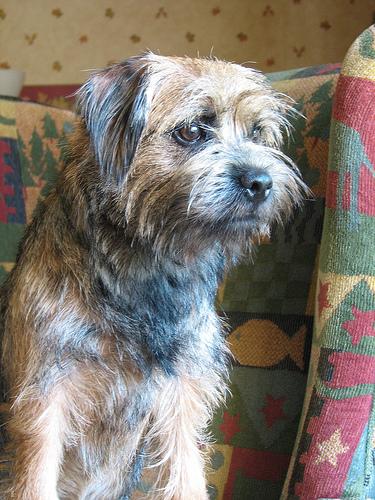
What is the Border Terrier?
The Border Terrier is a dog breed from Anglo-Scottish Border, England & Scotland with about males 33-35 cm, females 28-31 cm tall, about males 5.9-7.1 kg, females 5.1-6.4 kg, a double coat, wiry and weather-resistant coat, and a typical lifespan of 14.2 years.
Anglo-Scottish Border, England & Scotland
14.2 years
Males 33-35 cm, Females 28-31 cm
Males 5.9-7.1 kg, Females 5.1-6.4 kg
Double coat, wiry and weather-resistant
Grizzle-and-tan, blue-and-tan, red, wheaten
What is the Border Terrier temperament?
Border Terriers are spirited and fearless hunters with a surprisingly gentle and affectionate side that makes them excellent family companions.
These small but mighty dogs possess remarkable courage and determination, traits bred into them for centuries of fox hunting. Despite their tough hunting heritage, they're remarkably adaptable, eager to please, and form strong bonds with their families. Their intelligence and independent streak mean they can be stubborn, but consistent training channels their natural cleverness into obedience. Border Terriers balance their working dog instincts with genuine warmth, making them loyal and loving household members.
Where did the Border Terrier come from?
The Border Terrier originated in the rugged hills of the Anglo-Scottish border region, where it was traditionally used to bolt foxes from their burrows while hunting with the Border Hunt in Northumberland.
Originally called the Coquetdale Terrier or Redesdale Terrier after the valleys where it evolved, the breed eventually took the name Border Terrier by the late 1800s due to its association with the Border Hunt. The breed was officially recognized by the Kennel Club in 1920—the same year The Border Terrier Club was formed—with the first standard written by Jacob Robson and John Dodd. Interestingly, the breed had been rejected for Kennel Club recognition in 1914 before gaining acceptance just six years later, with the first registered Border Terrier, The Moss Trooper, having been registered in 1913.
What health and care needs does the Border Terrier have?
Border Terriers are generally healthy with an impressive life expectancy of 14.2 years, exceeding the average for purebreeds.
However, the breed has a notable predisposition to gall bladder disease, being significantly more likely to develop gall bladder mucocele and other related conditions compared to other dogs. They may also experience canine epileptoid cramping syndrome, a condition recognized in the breed. Regular veterinary check-ups and preventive care are recommended to monitor for these potential health issues.
Which breeds look similar to the Border Terrier?
The Border Terrier is useful to compare with Airedale, American Staffordshire Terrier, Australian Terrier, and Bedlington Terrier when practicing similar breed recognition.
How hard is the Border Terrier to recognize in BreedGuessr?
The Border Terrier gets easier to recognize in BreedGuessr when players focus on its Anglo-Scottish Border, England & Scotland origin, double coat, wiry and weather-resistant coat, and males 33-35 cm, females 28-31 cm outline before choosing an answer.
BreedGuessr reinforces those clues with real dog photos, multiple-choice comparisons, and quick links back to breed guides before you play another round.
What makes the Border Terrier memorable?
A memorable Border Terrier fact is this: Border Terriers were specifically bred with long enough legs to keep up with horses and hunting hounds, but small enough bodies to crawl into fox burrows—the perfect compromise hunting dog.
- Border Terriers were specifically bred with long enough legs to keep up with horses and hunting hounds, but small enough bodies to crawl into fox burrows—the perfect compromise hunting dog.
- The breed was rejected for Kennel Club recognition in 1914, but was successfully recognized just six years later in 1920.
- In 2008, Border Terriers ranked eighth in UK Kennel Club registrations, demonstrating their enduring popularity in Britain despite being a relatively small breed.
- Border Terriers have distinctive V-shaped ears that fall toward their cheeks and wiry, weather-resistant coats that repelled mud and dirt during their working days.
- The breed shares ancestry with two other terrier breeds from the same region: the Dandie Dinmont Terrier and the Bedlington Terrier.
Source: Wikipedia. Image: Wikimedia Commons (CC BY-SA 3.0)