Bouvier des Flandres
The Flemish Cattle Guardian
By BreedGuessr · Dog breed learning game maintainers · Published · Updated
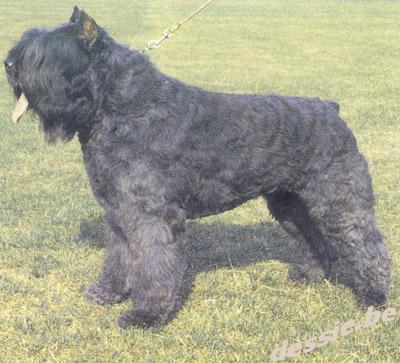
What is the Bouvier des Flandres?
The Bouvier des Flandres is a dog breed from Flanders, Belgium (early 1900s) with about 23-27 inches tall, about 80-120 lbs (males), lighter for females, a thick double coat, fawn, black, grey brindle, or pepper and salt coat, and a typical lifespan of 10-12 years.
Flanders, Belgium (early 1900s)
10-12 years
80-120 lbs (males), lighter for females
23-27 inches
Thick double coat, fawn, black, grey brindle, or pepper and salt
Heavy beard and mustache
What is the Bouvier des Flandres temperament?
Bouviers des Flandres are gentle, rational, and even-tempered dogs with unwavering loyalty to their families.
Despite their imposing appearance and working heritage, they possess a calm, protective nature that makes them excellent family companions and guardians. These intelligent dogs are sensitive to their owners' emotions and respond well to patient training, though their independent streak reflects their historical role as autonomous farm workers.
Where did the Bouvier des Flandres come from?
The breed's roots trace back to monks at Ter Duinen monastery in medieval Flanders, who created these powerful dogs by crossing Irish wolfhounds and Scottish deerhounds with local farm dogs.
The breed nearly vanished during World War I due to regional devastation and military use, with Nic, a celebrated trench dog, credited as the founder of the modern Bouvier. A unified breed standard wasn't established until 1936 by a French-Belgian committee, and the FCI standard wasn't officially adopted until 1965 after further setbacks from World War II.
What health and care needs does the Bouvier des Flandres have?
Bouviers are generally robust dogs, though their double coat requires significant maintenance with weekly brushing and trimming every 3-5 weeks to prevent matting.
Hip dysplasia and certain eye conditions can occur in the breed, so responsible breeding and health screening are important. Their thick coat sheds hair that gets caught in the undercoat, requiring diligent grooming rather than being truly non-shedding.
Which breeds look similar to the Bouvier des Flandres?
The Bouvier des Flandres is useful to compare with Affenpinscher, Afghan Hound, African Hunting Dog, and Airedale when practicing similar breed recognition.
How hard is the Bouvier des Flandres to recognize in BreedGuessr?
The Bouvier des Flandres gets easier to recognize in BreedGuessr when players focus on its Flanders, Belgium (early 1900s) origin, thick double coat, fawn, black, grey brindle, or pepper and salt coat, and 23-27 inches outline before choosing an answer.
BreedGuessr reinforces those clues with real dog photos, multiple-choice comparisons, and quick links back to breed guides before you play another round.
What makes the Bouvier des Flandres memorable?
A memorable Bouvier des Flandres fact is this: The name 'Vuilbaard' literally means 'dirty beard' in Dutch, referring to the breed's distinctive heavy facial hair.
- The name 'Vuilbaard' literally means 'dirty beard' in Dutch, referring to the breed's distinctive heavy facial hair.
- Bouviers were originally ear-cropped and tail-docked for practical reasons—to prevent injuries while herding and pulling carts, not just as cosmetics.
- After automobiles replaced cattle transportation, the breed's original purpose became obsolete, but they thrived as guard and police dogs instead.
- A unified breed standard took 50+ years to establish due to conflicts between three competing variants: Paret, Moerman/Roeselare, and Briard.
- Bouviers have been used as police and military dogs across Europe, continuing their working heritage from farm life.
- Ear cropping was made illegal in their region of origin, Flanders, Belgium, starting in 2006.
Source: Wikipedia. Image: Wikimedia Commons (CC BY-SA 3.0)