Briard
The French Shepherd Guardian
By BreedGuessr · Dog breed learning game maintainers · Published · Updated
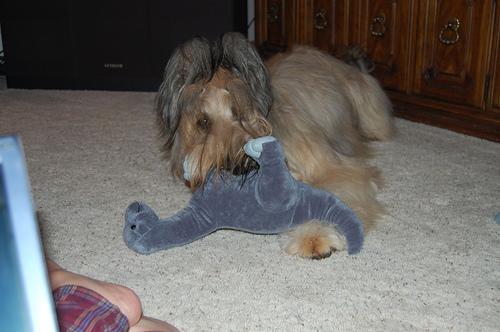
What is the Briard?
The Briard is a dog breed from Brie region, France (1863) with about 23-27 inches tall, a long, thick, goat-like texture coat, and a typical lifespan of 12-13 years.
Brie region, France (1863)
12-13 years
23-27 inches
Long, thick, goat-like texture
Black, grey, blue, or fawn
Double dewclaw on hind legs
What is the Briard temperament?
Briards are intelligent, loyal working dogs with strong protective instincts honed by centuries of herding and defending livestock.
They form deep bonds with their families and are naturally alert and vigilant, making excellent guardians. These active, energetic dogs require substantial exercise and mental stimulation to thrive. Despite their serious working heritage, Briards are affectionate and devoted companions who are eager to please and responsive to training.
Where did the Briard come from?
The Briard originated in the Brie region of north-central France, where shepherd dogs were documented as early as 1783 herding sheep and protecting them from predators.
The breed was first shown at the inaugural Paris dog show in 1863, with the first official registration, Sans Gêne, occurring in 1885. A formal breed standard was established in 1897, distinguishing the long-haired Briard from its short-haired cousin, the Beauceron. The breed nearly disappeared during both World Wars when suitable dogs were conscripted for military service, but experienced a dramatic resurgence in popularity during the 1970s and 1980s as mechanization transformed agriculture.
What health and care needs does the Briard have?
Briards are generally healthy dogs with a median lifespan of 12.6 years.
The breed is susceptible to congenital hereditary retinal dystrophy and related eye conditions similar to Leber congenital amaurosis, though gene therapy has shown promise in treating some cases. Regular health screening and responsible breeding practices are important for maintaining the breed's wellbeing.
Which breeds look similar to the Briard?
The Briard is useful to compare with German Shepherd, Schipperke, Affenpinscher, and Afghan Hound when practicing similar breed recognition.
How hard is the Briard to recognize in BreedGuessr?
The Briard gets easier to recognize in BreedGuessr when players focus on its Brie region, France (1863) origin, long, thick, goat-like texture coat, and 23-27 inches outline before choosing an answer.
BreedGuessr reinforces those clues with real dog photos, multiple-choice comparisons, and quick links back to breed guides before you play another round.
What makes the Briard memorable?
A memorable Briard fact is this: Briards were conscripted into military service during both World Wars, nearly causing the breed to disappear from France.
- Briards were conscripted into military service during both World Wars, nearly causing the breed to disappear from France.
- The breed nearly vanished after World War I but experienced such a popularity explosion in the 1970s-80s that the breed club had more members than any other French breed association in history.
- An unusual breed standard requirement is the double dewclaw on the hind legs—lacking one is considered a disqualifying fault.
- The breed's goat-like coat texture was so distinctive that a 1897 breed standard initially described two coat varieties, including a woolly 'sheep-like' type that later disappeared.
- Gene therapy successfully reversed blindness in three Briard puppies in 2001, marking an early success in treating hereditary eye disease.
- Briards transitioned from working shepherd dogs to beloved companion animals partly due to post-WWII mechanization of agriculture and rural depopulation.
Source: Wikipedia. Image: Wikimedia Commons (CC BY-SA 3.0)