Brittany Spaniel
The Eager Bird Hunter
By BreedGuessr · Dog breed learning game maintainers · Published · Updated
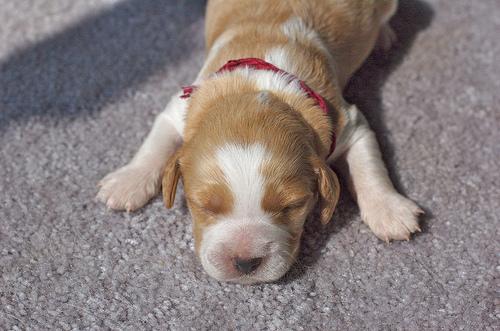
What is the Brittany Spaniel?
The Brittany Spaniel is a dog breed from Brittany, France (17th-19th centuries) with about 17.5-20.5 inches (american), 16-18 inches (french) tall, about 30-40 lbs, a orange & white, liver & white, or black & white coat, and a typical lifespan of 11-13 years.
Brittany, France (17th-19th centuries)
11-13 years
17.5-20.5 inches (American), 16-18 inches (French)
30-40 lbs
Orange & white, liver & white, or black & white
Medium-sized, compact, naturally bob-tailed
What is the Brittany Spaniel temperament?
Brittanys are the eager overachievers of the spaniel world—sensitive, intelligent, and genuinely eager to please.
Originally bred as hunting companions, they maintain that spirited, energetic nature while remaining surprisingly gentle and sweet-natured. They respond better to positive reinforcement than harsh corrections, making them perfect for owners who appreciate their responsive and cooperative temperament. These dogs thrive on activity and purpose, whether hunting in fields or playing fetch in backyards.
Where did the Brittany Spaniel come from?
The Brittany emerged in the Brittany region of northwestern France between the 17th and 19th centuries, with hunting scenes depicting orange and white bobtailed dogs appearing in period tapestries and paintings.
The breed was formally recognized in 1907 when a dog named Boy became the first registered Brittany in France, establishing the official breed standards that same year. It reached America by 1931 and earned American Kennel Club approval in 1934, though the breed developed differently in the United States, leading to the 'American Brittany' distinction. In 1982, the word 'Spaniel' was officially dropped from the breed name.
What health and care needs does the Brittany Spaniel have?
Brittanys have a life expectancy of 11-13 years with generally good health profiles.
They show a slightly elevated predisposition to hip dysplasia and glaucoma compared to overall dog populations, and potential buyers should seek health testing from reputable breeders. Elbow dysplasia occurs at relatively low rates in the breed.
Which breeds look similar to the Brittany Spaniel?
The Brittany Spaniel is useful to compare with Blenheim Spaniel, Cocker Spaniel, English Springer, and Irish Water Spaniel when practicing similar breed recognition.
How hard is the Brittany Spaniel to recognize in BreedGuessr?
The Brittany Spaniel gets easier to recognize in BreedGuessr when players focus on its Brittany, France (17th-19th centuries) origin, orange & white, liver & white, or black & white coat, and 17.5-20.5 inches (american), 16-18 inches (french) outline before choosing an answer.
BreedGuessr reinforces those clues with real dog photos, multiple-choice comparisons, and quick links back to breed guides before you play another round.
What makes the Brittany Spaniel memorable?
A memorable Brittany Spaniel fact is this: Brittanys are often born with long tails that are docked to short stubs, though some are naturally born with short 'bobtails.'
- Brittanys are often born with long tails that are docked to short stubs, though some are naturally born with short 'bobtails.'
- The breed's name was officially changed in 1982 when 'Spaniel' was dropped—they're technically not spaniels despite their spaniel-type appearance.
- American and French Brittanys are noticeably different, with American lines bred larger and blockier-headed than their more refined French cousins.
- Brittanys are smaller and leggier than setters but larger and less stout than most spaniels, making them the Goldilocks of hunting dogs.
- First written records of Brittanys come from 1850, when Reverend Davies described hunting with excellent 'bobtailed' pointer-retrievers.
- Brittanys are so sensitive and eager to please that harsh corrections are often completely unnecessary—they'll work harder for a kind word.
Source: Wikipedia. Image: Wikimedia Commons (CC BY-SA 3.0)