Bull Mastiff
The Gamekeeper’s Night Dog
By BreedGuessr · Dog breed learning game maintainers · Published · Updated
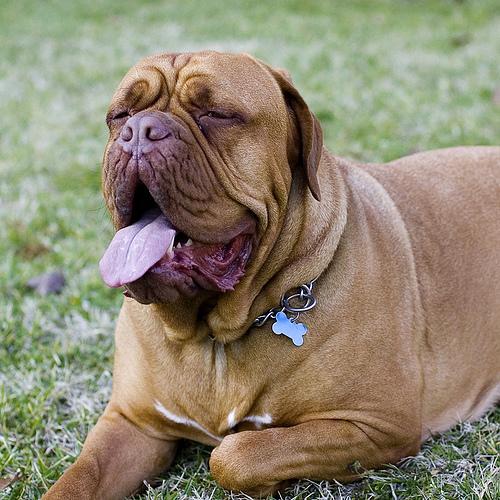
What is the Bull Mastiff?
The Bull Mastiff is a dog breed from England, 19th century with about females 24-26 in, males ~27+ in tall, about females 100-120 lbs, males 120+ lbs, a fawn, red, or brindle coat, and a typical lifespan of 10.2 years.
England, 19th century
10.2 years
Females 24-26 in, Males ~27+ in
Females 100-120 lbs, Males 120+ lbs
Fawn, red, or brindle
Black, short and flat
What is the Bull Mastiff temperament?
The Bullmastiff is a powerful guardian with a surprisingly calm and affectionate disposition toward family.
Bred from the aggressive English Bulldog and the gentler Mastiff, this breed strikes a unique balance—confident and protective without being overly aggressive. They're loyal companions that bond deeply with their owners, though their independent streak means they need consistent, firm guidance. Despite their intimidating appearance, they're known for being gentle with children and surprisingly patient with family members.
Where did the Bull Mastiff come from?
The Bullmastiff emerged in 18th-century England from crosses between English Mastiffs and Old English Bulldogs, specifically developed to help gamekeepers combat poaching on estates.
By the early 1900s, the breed earned the nickname 'Gamekeeper's Night Dog' for its nocturnal patrol duties. The Kennel Club officially recognized the Bullmastiff as a distinct breed in 1924, requiring a minimum of four generations of pure Bullmastiff ancestry. The breed gained further prominence when De Beers imported them to South Africa in 1928 to guard their diamond mines.
What health and care needs does the Bull Mastiff have?
Bullmastiffs have a notably shorter life expectancy of approximately 10.2 years, compared to the average of 12.7 years for purebreds.
They are prone to several serious health conditions including hip and elbow dysplasia (affecting roughly 24.5% and 13.8% respectively), progressive retinal atrophy, lymphoma, and ear infections. Prospective owners should prioritize genetic screening and be prepared for potential age-related health challenges typical of large breeds.
Which breeds look similar to the Bull Mastiff?
The Bull Mastiff is useful to compare with Great Dane, Tibetan Mastiff, Affenpinscher, and Afghan Hound when practicing similar breed recognition.
How hard is the Bull Mastiff to recognize in BreedGuessr?
The Bull Mastiff gets easier to recognize in BreedGuessr when players focus on its England, 19th century origin, fawn, red, or brindle coat, and females 24-26 in, males ~27+ in outline before choosing an answer.
BreedGuessr reinforces those clues with real dog photos, multiple-choice comparisons, and quick links back to breed guides before you play another round.
What makes the Bull Mastiff memorable?
A memorable Bull Mastiff fact is this: The Bullmastiff was created by crossing the tough, aggressive 19th-century Bulldog with the larger, gentler Mastiff to create the perfect guardian dog.
- The Bullmastiff was created by crossing the tough, aggressive 19th-century Bulldog with the larger, gentler Mastiff to create the perfect guardian dog.
- De Beers imported Bullmastiffs to South African diamond mines in 1928, making them one of the first dog breeds used for industrial security.
- Despite being brachycephalic (flat-faced), the breed's breathing is not affected by its short muzzle, unlike many other flat-faced dogs.
- A dominant mutation in the RHO gene causes progressive retinal atrophy in the breed, making genetic testing important for breeding programs.
- The breed's black muzzle gradually becomes paler toward the eyes, creating a distinctive facial marking pattern.
- Bullmastiffs are known for 'lean and mean' builds compared to their Mastiff ancestors, balancing power with surprising agility.
Source: Wikipedia. Image: Wikimedia Commons (CC BY-SA 3.0)