Dingo
Australia’s Ancient Wild Dog
By BreedGuessr · Dog breed learning game maintainers · Published · Updated
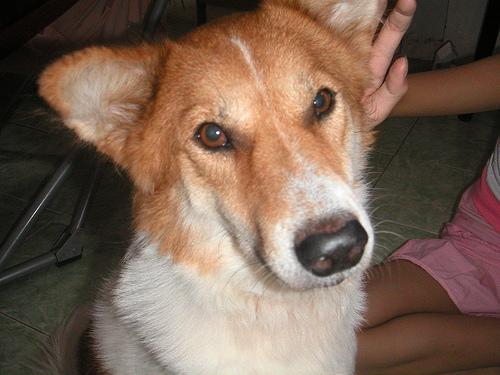
What is the Dingo?
The Dingo is a dog breed from Australia, arrived ~3,500 years ago with about 13-20 inches (33-50 cm) tall, about 22-33 lbs (10-15 kg), a short, dense; tan, black & tan, or cream coat, and a typical lifespan of 8-10 years in the wild.
Australia, arrived ~3,500 years ago
8-10 years in the wild
22-33 lbs (10-15 kg)
13-20 inches (33-50 cm)
Short, dense; tan, black & tan, or cream
Lean, hardy, built for speed and stamina
What is the Dingo temperament?
Dingoes are highly intelligent, social pack animals with strong bonds between mated pairs and their offspring.
They are adaptable and resourceful hunters with keen instincts for survival in harsh Australian environments. Pack-living dingoes demonstrate complex social hierarchies and cooperative behaviors, though they are naturally wary of humans. Their personality reflects thousands of years of independent evolution, making them distinctly different from domestic dogs despite their shared ancestry.
Where did the Dingo come from?
Dingoes arrived in Australia approximately 3,500 years ago, making them one of the continent's oldest large carnivores.
Originally domesticated dogs from Asia, they spread through Maritime Southeast Asia before establishing feral populations across Australia. When British colonists arrived in 1788, they documented dingoes living alongside Indigenous Australians, who had developed complex relationships with these animals over millennia. The name 'dingo' comes from the Dharug language of Sydney-area Indigenous peoples, first recorded by European explorer Watkin Tench in 1789.
What health and care needs does the Dingo have?
Dingoes are naturally hardy animals adapted to survive in Australia's diverse and challenging environments.
Wild dingoes have lifespans of 8-10 years, with longevity dependent on food availability, territorial conflicts, and environmental conditions. As feral animals, they face threats from human persecution, vehicle strikes, and diseases transmitted by domestic dogs.
Which breeds look similar to the Dingo?
The Dingo is useful to compare with Affenpinscher, Afghan Hound, African Hunting Dog, and Airedale when practicing similar breed recognition.
How hard is the Dingo to recognize in BreedGuessr?
The Dingo gets easier to recognize in BreedGuessr when players focus on its Australia, arrived ~3,500 years ago origin, short, dense; tan, black & tan, or cream coat, and 13-20 inches (33-50 cm) outline before choosing an answer.
BreedGuessr reinforces those clues with real dog photos, multiple-choice comparisons, and quick links back to breed guides before you play another round.
What makes the Dingo memorable?
A memorable Dingo fact is this: Dingoes have a wedge-shaped skull that appears disproportionately large compared to their lean bodies, giving them a distinctive fierce appearance.
- Dingoes have a wedge-shaped skull that appears disproportionately large compared to their lean bodies, giving them a distinctive fierce appearance.
- The dingo's closest living relative is the New Guinea singing dog, with their evolutionary lineage splitting early before modern domestic dogs even existed.
- Indigenous Australians had different names for dingoes depending on whether they lived in camps near humans or roamed wild in the wilderness.
- Early European colonists like Captain William Dampier described dingoes as 'hungry wolves' that were 'nothing but skin and bones,' highlighting their lean, muscular physique.
- Dingo packs are typically small family units: a mated pair and their offspring from one or two years, creating tight-knit social groups.
- The taxonomic classification of dingoes remains debated among scientists, with some considering them a subspecies of dog, wolf, or an entirely separate species.
Source: Wikipedia. Image: Wikimedia Commons (CC BY-SA 3.0)