English Springer
The Versatile Flushing Spaniel
By BreedGuessr · Dog breed learning game maintainers · Published · Updated
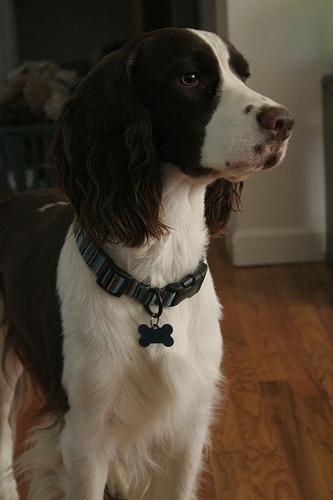
What is the English Springer?
The English Springer is a dog breed from Norfolk/Shropshire Spaniels, England (mid-19th century) with about 19-20 inches (males) tall, about 40-50 lbs, a moderately long, feathered; black/liver with white or roan coat, and a typical lifespan of 12-13.5 years.
Norfolk/Shropshire Spaniels, England (mid-19th century)
12-13.5 years
19-20 inches (males)
40-50 lbs
Moderately long, feathered; black/liver with white or roan
Energetic, intelligent, eager to please
What is the English Springer temperament?
English Springers are enthusiastic, eager-to-please dogs with sharp intelligence and boundless energy.
They're deeply affectionate with their families and remarkably adaptable, thriving in both active working environments and family homes. Despite their friendly nature, they maintain strong hunting instincts and require significant physical and mental stimulation to prevent boredom. Their responsiveness to training and gentle expression make them wonderful companions for experienced dog owners who can channel their drive productively.
Where did the English Springer come from?
The English Springer Spaniel evolved from Norfolk and Shropshire Spaniels in the mid-19th century, originally developed as gun dogs for flushing game birds.
Until less than a century ago, springers and cockers came from the same litters—the smaller dogs were used for woodcock hunting while their larger littermates 'sprang' other game birds into the air for hunters. The breed was formally recognized as distinct by The Kennel Club in 1902. Over the past 70 years, the breed has dramatically diverged into separate working and show lines with almost completely segregated gene pools, making them appear as virtually different breeds despite sharing registration.
What health and care needs does the English Springer have?
English Springers have a solid life expectancy of 12-13.5 years, slightly above the average for purebreeds.
The breed is predisposed to various skin conditions including otitis externa, Malassezia dermatitis, and seborrhoea, likely due to their floppy ears and feathered coats. Regular ear cleaning and coat maintenance are essential preventative care measures.
Which breeds look similar to the English Springer?
The English Springer is useful to compare with Blenheim Spaniel, Brittany Spaniel, Cocker Spaniel, and Irish Water Spaniel when practicing similar breed recognition.
How hard is the English Springer to recognize in BreedGuessr?
The English Springer gets easier to recognize in BreedGuessr when players focus on its Norfolk/Shropshire Spaniels, England (mid-19th century) origin, moderately long, feathered; black/liver with white or roan coat, and 19-20 inches (males) outline before choosing an answer.
BreedGuessr reinforces those clues with real dog photos, multiple-choice comparisons, and quick links back to breed guides before you play another round.
What makes the English Springer memorable?
A memorable English Springer fact is this: English Springers are used as sniffer dogs on a widespread basis, including airport security and customs work.
- English Springers are used as sniffer dogs on a widespread basis, including airport security and customs work.
- Field-bred and show-bred English Springers have been so genetically isolated for 70+ years that a field dog would never win a show, and a show dog couldn't survive a field trial.
- Their name comes from their original job: to 'spring' or flush game birds into the air for hunters to shoot.
- Show-bred English Springers have noticeably longer, more pendant ears and heavier bone structure than their working cousins.
- Less than a century ago, breeders couldn't predict whether a spaniel puppy would become a springer or cocker—it depended entirely on its size.
Source: Wikipedia. Image: Wikimedia Commons (CC BY-SA 3.0)