Flat-coated Retriever
The Eternal Optimist Retriever
By BreedGuessr · Dog breed learning game maintainers · Published · Updated
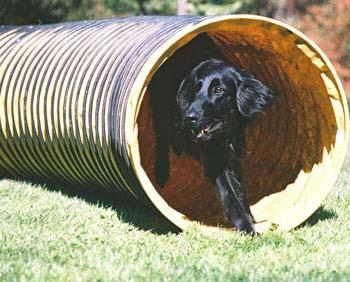
What is the Flat-coated Retriever?
The Flat-coated Retriever is a dog breed from England, mid-19th century with about males 16-17\", females 15-16\" tall, about males 60-80 lb, females 55-75 lb, a flat, dense, well-feathered; black, liver, or yellow coat, and a typical lifespan of 8-10 years.
England, mid-19th century
8-10 years
Males 16-17\", Females 15-16\"
Males 60-80 lb, Females 55-75 lb
Flat, dense, well-feathered; Black, Liver, or Yellow
Energetic, Friendly, Eager to Please
What is the Flat-coated Retriever temperament?
Flat-Coated Retrievers are the perpetual puppies of the retriever world, never quite losing their youthful exuberance and playful spirit.
They're incredibly social, friendly, and eager to please, making them excellent family companions. While they'll alert you with an assertive bark to protect their owners, they lack the aggression to back it up—they're simply too good-natured. Their boundless energy and excellent sense of smell have earned them roles as drug-sniffer dogs and guide dog candidates, but above all, they thrive on human companionship and active engagement.
Where did the Flat-coated Retriever come from?
Developed in mid-19th century England as gamekeepers' hunting dogs, Flat-Coated Retrievers were built from a fascinating mix of ancestries: the now-extinct St.
John's water dog, Newfoundlands brought by Canadian seafarers, Collies for trainability, and Setter blood for superior scenting. The breed stabilized around 1880 and quickly gained popularity in America after 1873, but their dominance was short-lived—the Golden Retriever, ironically bred partly from Flat-Coats, eclipsed them by the early 20th century. The breed nearly disappeared after World War II, but dedicated breeders revived the population beginning in the 1960s, securing its survival.
What health and care needs does the Flat-coated Retriever have?
Flat-Coated Retrievers have a notably shorter lifespan than many other breeds, typically living 8-10 years.
They can be prone to certain cancers and hip dysplasia, so responsible breeding practices and regular health screenings are important. Their love of water and high energy levels mean they need regular exercise to maintain good health and prevent obesity-related issues.
Which breeds look similar to the Flat-coated Retriever?
The Flat-coated Retriever is useful to compare with Chesapeake Bay Retriever, Curly-coated Retriever, Golden Retriever, and Labrador Retriever when practicing similar breed recognition.
How hard is the Flat-coated Retriever to recognize in BreedGuessr?
The Flat-coated Retriever gets easier to recognize in BreedGuessr when players focus on its England, mid-19th century origin, flat, dense, well-feathered; black, liver, or yellow coat, and males 16-17\", females 15-16\" outline before choosing an answer.
BreedGuessr reinforces those clues with real dog photos, multiple-choice comparisons, and quick links back to breed guides before you play another round.
What makes the Flat-coated Retriever memorable?
A memorable Flat-coated Retriever fact is this: They're called the 'Peter Pan' of retrievers because they never truly grow up, maintaining their playful puppy-like personality throughout their lives.
- They're called the 'Peter Pan' of retrievers because they never truly grow up, maintaining their playful puppy-like personality throughout their lives.
- Yellow Flat-Coated Retrievers are actually disqualified from conformation competitions, though they can compete in other dog sports and venues.
- The Golden Retriever was partly bred from Flat-Coated Retrievers, making them the unknowing ancestors of one of the world's most popular dog breeds.
- They were nearly extinct after World War II, with so few remaining that the breed's survival was uncertain until careful breeding efforts revived them in the 1960s.
- Their exceptional sense of smell and boundless energy made them popular choices for drug detection work and guide dog programs.
- Black is the most common color, but they also come in liver (dark brown) and the rare yellow—and they absolutely love water.
Source: Wikipedia. Image: Wikimedia Commons (CC BY-SA 3.0)