Great Dane
The Noble German Mastiff
By BreedGuessr · Dog breed learning game maintainers · Published · Updated
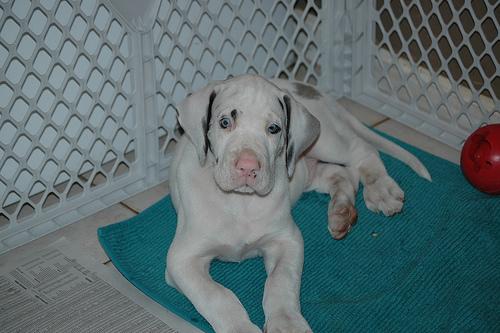
What is the Great Dane?
The Great Dane is a dog breed from Germany (18th-19th century) with about 28-34 inches tall, about 110-175 pounds, and a typical lifespan of 7-10 years.
Germany (18th-19th century)
7-10 years
28-34 inches
110-175 pounds
Short, smooth, dense
One of the world’s largest breeds
What is the Great Dane temperament?
Great Danes are gentle giants with calm, affectionate temperaments that belie their imposing size.
Despite their massive stature and hunting heritage, they're known for being remarkably devoted and protective of their families without being aggressive. These dogs thrive on human companionship and form deep bonds with their owners, often acting like gentle shadows in the home. Their patience and intuitive nature make them excellent companions, though their sheer size means they need space and regular exercise to stay healthy and content.
Where did the Great Dane come from?
The Great Dane descends from medieval hunting dogs used by European nobility to hunt bears, wild boar, and deer.
In the 16th century, German nobles imported and selectively bred English and Irish hunting dogs, developing their own distinct type at their courts. By the 17th century, these 'Kammerhunde' (chamber dogs) were treasured companions in royal bedchambers, wearing ornate collars and even serving as bodyguards against would-be assassins. In 1878, a Berlin committee formally renamed the breed from 'Englische Dogge' to 'Deutsche Dogge' (Great Dane), establishing the foundation for the modern breed we know today.
What health and care needs does the Great Dane have?
Great Danes have a relatively short lifespan of 7-10 years compared to smaller breeds.
They are prone to heart conditions, hip dysplasia, and bloat (gastric dilatation-volvulus), which can be life-threatening and requires immediate veterinary attention. Regular health screening and careful monitoring are essential for maintaining quality of life in these magnificent dogs.
Which breeds look similar to the Great Dane?
The Great Dane is useful to compare with Bull Mastiff, Tibetan Mastiff, Affenpinscher, and Afghan Hound when practicing similar breed recognition.
How hard is the Great Dane to recognize in BreedGuessr?
The Great Dane gets easier to recognize in BreedGuessr when players focus on its Germany (18th-19th century) origin and 28-34 inches outline before choosing an answer.
BreedGuessr reinforces those clues with real dog photos, multiple-choice comparisons, and quick links back to breed guides before you play another round.
What makes the Great Dane memorable?
A memorable Great Dane fact is this: Great Danes were called 'Kammerhunde' or 'chamber dogs' and slept in the bedchambers of German princes, sometimes protecting them from assassins at night.
- Great Danes were called 'Kammerhunde' or 'chamber dogs' and slept in the bedchambers of German princes, sometimes protecting them from assassins at night.
- In the 16th century, Great Danes wore elaborate collars made of green velvet with silver lettering or their master's coat of arms.
- The breed was renamed from 'Englische Dogge' to 'Deutsche Dogge' (German Mastiff) in 1878 by a Berlin committee to establish German identity and market them as luxury dogs.
- Despite being one of the world's largest dog breeds, Great Danes are known for being 'couch potatoes' that require less exercise than many smaller breeds.
- Great Danes were catch dogs during hunts, used to seize and hold bears and boars in place until hunters could kill them.
- The English word 'dog' became associated with mastiff-type breeds in Germany and France due to the terminology used for these hunting dogs.
Source: Wikipedia. Image: Wikimedia Commons (CC BY-SA 3.0)