Great Pyrenees
The Royal Mountain Guardian
By BreedGuessr · Dog breed learning game maintainers · Published · Updated
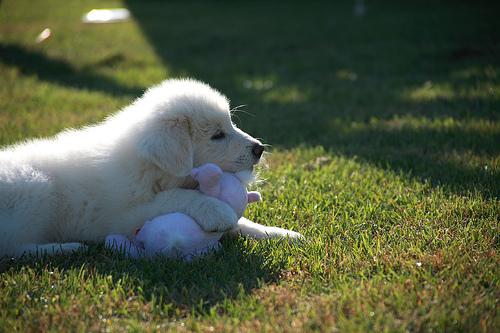
What is the Great Pyrenees?
The Great Pyrenees is a dog breed from Pyrenees Mountains, France with about 25-32 inches tall, about 100-160 pounds, a thick, double-layered white coat, and a typical lifespan of 10-12 years.
Pyrenees Mountains, France
10-12 years
25-32 inches
100-160 pounds
Thick, double-layered white
Independent, protective guardian
What is the Great Pyrenees temperament?
Great Pyrenees are independent thinkers bred to make decisions protecting livestock alone in harsh mountain terrain.
Despite their massive size, they're remarkably gentle and patient with their family, though they retain a strong protective instinct and can be aloof with strangers. They're intelligent and calm but require experienced owners who understand their guardian nature—they think for themselves rather than eagerly following commands. These gentle giants are surprisingly agile for their size and possess an innate watchfulness that makes them excellent family protectors.
Where did the Great Pyrenees come from?
The Pyrenean Mountain Dog originates from the Pyrenees Mountains between France and Spain, with roots possibly tracing back to white livestock guardian dogs brought to the region during Roman times.
The breed gained prominence in 17th-century French court when Madame de Maintenon and the Dauphin introduced them to King Louis XIV, who declared them the 'Royal Dog of France,' and they became prized by French nobility. After wolves were extirpated from the Pyrenees in the 1800s, the breed nearly disappeared until French breeder Bernard Senac-Lagrange saved it from extinction in the early 1900s, establishing the first breed club and standard in 1923. The breed was exported to North America in the 1930s where it became known as the Great Pyrenees and gained popularity in show rings.
What health and care needs does the Great Pyrenees have?
Great Pyrenees are generally healthy dogs with a lifespan of 10-12 years, though their large size makes them susceptible to hip dysplasia and other joint issues.
They can be prone to bloat and heart conditions, particularly dilated cardiomyopathy, requiring responsible breeding practices. Their thick white coat requires regular grooming to prevent matting and skin issues, and they thrive in cooler climates due to their mountain heritage.
Which breeds look similar to the Great Pyrenees?
The Great Pyrenees is useful to compare with Affenpinscher, Afghan Hound, African Hunting Dog, and Airedale when practicing similar breed recognition.
How hard is the Great Pyrenees to recognize in BreedGuessr?
The Great Pyrenees gets easier to recognize in BreedGuessr when players focus on its Pyrenees Mountains, France origin, thick, double-layered white coat, and 25-32 inches outline before choosing an answer.
BreedGuessr reinforces those clues with real dog photos, multiple-choice comparisons, and quick links back to breed guides before you play another round.
What makes the Great Pyrenees memorable?
A memorable Great Pyrenees fact is this: King Louis XIV of France named them the 'Royal Dog of France' in the 17th century, making them an official breed of nobility.
- King Louis XIV of France named them the 'Royal Dog of France' in the 17th century, making them an official breed of nobility.
- Despite their massive size, Great Pyrenees were bred to make independent decisions while protecting flocks alone in mountain terrain—they think like guardians, not followers.
- They may be ancestors of the Newfoundland breed, as French settlers may have taken them to Canada.
- Genomic studies link them more closely to ancient hound breeds like the Pharaoh Hound and Ibizan Hound than to other modern livestock guardians.
- The breed was nearly extinct by the early 1900s until one French breeder rescued it by traveling the Pyrenees to collect the best remaining specimens.
- British breed clubs had to issue specific guidance in 2011 to prevent show judges from rewarding overly glamorous, heavy examples at the expense of lean, athletic dogs suited to actual mountain work.
Source: Wikipedia. Image: Wikimedia Commons (CC BY-SA 3.0)