Irish Terrier
The Fiery Irish Fighter
By BreedGuessr · Dog breed learning game maintainers · Published · Updated
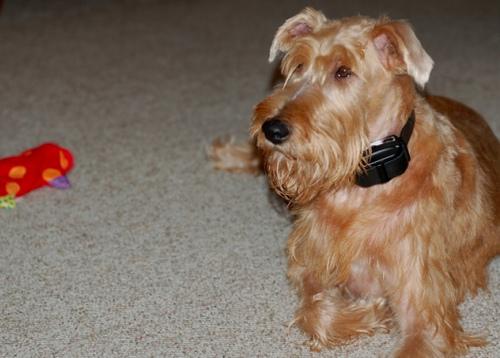
What is the Irish Terrier?
The Irish Terrier is a dog breed from Ireland with about 45-48 cm (18-19 in) tall, about 11-15 kg (24-33 lb), a red, wheaten, or golden red wiry double coat coat, and a typical lifespan of 12-15 years.
Ireland
12-15 years
45-48 cm (18-19 in)
11-15 kg (24-33 lb)
Red, wheaten, or golden red wiry double coat
Active, spirited, intelligent, determined
What is the Irish Terrier temperament?
Irish Terriers are full of life and personality—spirited, active dogs that thrive on mental and physical challenges.
They're intelligent and trainable, excelling in dog sports like agility, yet maintain a playful, engaging demeanor. Despite their feisty terrier nature, well-socialized Irish Terriers are loyal companions with a characteristically "fiery" expression that matches their bold personality. They need consistent engagement and activity to channel their natural energy constructively.
Where did the Irish Terrier come from?
The Irish Terrier is one of the oldest terrier breeds, with Ireland as its proud homeland.
The breed gained formal recognition at Dublin's 1873 dog show, which provided the first separate class for Irish Terriers. By the 1880s, they had become the fourth most popular breed in Great Britain and Ireland, reflecting their widespread appeal as both working dogs and beloved companions. Their popularity established them as a foundational breed in terrier development.
What health and care needs does the Irish Terrier have?
Irish Terriers are generally hardy and robust dogs well-suited to various climates thanks to their weather-resistant wiry coat.
However, regular grooming and coat maintenance are essential, as their double coat requires frequent professional trimming to maintain proper shape and health. Like many terrier breeds, they can be prone to ear issues due to their folded ear carriage, so regular ear cleaning is recommended.
Which breeds look similar to the Irish Terrier?
The Irish Terrier is useful to compare with Airedale, American Staffordshire Terrier, Australian Terrier, and Bedlington Terrier when practicing similar breed recognition.
How hard is the Irish Terrier to recognize in BreedGuessr?
The Irish Terrier gets easier to recognize in BreedGuessr when players focus on its Ireland origin, red, wheaten, or golden red wiry double coat coat, and 45-48 cm (18-19 in) outline before choosing an answer.
BreedGuessr reinforces those clues with real dog photos, multiple-choice comparisons, and quick links back to breed guides before you play another round.
What makes the Irish Terrier memorable?
A memorable Irish Terrier fact is this: Their distinctive wiry double coat comes in shades of red, wheaten, or golden red, with the inner undercoat also being red—a unique feature among terriers.
- Their distinctive wiry double coat comes in shades of red, wheaten, or golden red, with the inner undercoat also being red—a unique feature among terriers.
- Irish Terriers have a characteristically 'fiery' expression, with small dark brown eyes topped by well-groomed eyebrows that add to their alert appearance.
- Historically, Irish Terrier tails were docked at birth, but in countries where docking is prohibited, judges now emphasize proper tail carriage held at a specific angle.
- The breed's rectangular body shape is distinctly different from other terriers—longer and more racy than a Fox Terrier, with a notably deep chest.
- Small patches of white are allowed on the chest, but no white should appear elsewhere on their coat, making color consistency important in breed standards.
- Irish Terriers can develop grey hair as they age, a natural change that adds character to their vibrant red coats over time.
Source: Wikipedia. Image: Wikimedia Commons (CC BY-SA 3.0)