Irish Wolfhound
The Gentle Giant Warrior
By BreedGuessr · Dog breed learning game maintainers · Published · Updated
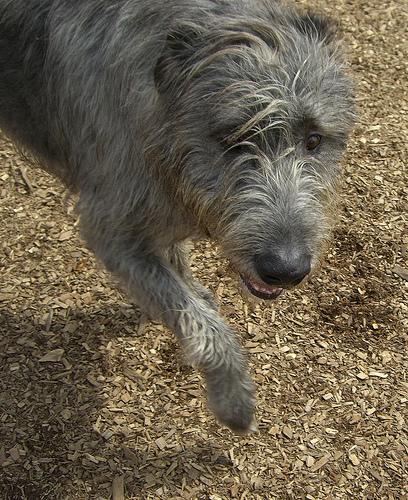
What is the Irish Wolfhound?
The Irish Wolfhound is a dog breed from Ireland, 6th century or earlier with about 32-36 inches (81-91 cm) tall, about 140-180 lbs (64-82 kg), a wiry, medium-length; gray, brindle, red, or fawn coat, and a typical lifespan of 7-10 years.
Ireland, 6th century or earlier
7-10 years
32-36 inches (81-91 cm)
140-180 lbs (64-82 kg)
Wiry, medium-length; gray, brindle, red, or fawn
Noble, gentle, dignified sighthound
What is the Irish Wolfhound temperament?
Despite their massive size and formidable hunting heritage, Irish Wolfhounds are surprisingly gentle and peaceful companions.
They possess a calm, dignified demeanor and form deep bonds with their families, showing remarkable patience with children. These sighthounds retain their coursing instinct but are generally good-natured and not aggressive, making them excellent family dogs despite their intimidating presence. Their mild aspect belies their incredible strength—a trait observers noted even in the 18th century.
Where did the Irish Wolfhound come from?
The Irish Wolfhound's lineage traces back to at least the 6th century, when the Gaels used these massive hounds to hunt wolves across the Irish countryside.
Legendary warrior Cú Chulainn's name means 'hound of Culann,' reflecting the breed's cultural significance in Irish mythology and literature. By the 1600s, their popularity led to mass exports to European royal houses, nearly causing their extinction; Oliver Cromwell even issued a decree in 1652 to protect remaining dogs from wolf control purposes. The last Irish wolf was killed in 1786, marking the end of the wolfhound's original hunting purpose, though the breed survived through aristocratic families who kept them as status symbols.
What health and care needs does the Irish Wolfhound have?
Irish Wolfhounds have notably shorter lifespans than most dog breeds, typically living only 7-10 years.
They are prone to heart conditions, bone and joint issues, and bone cancer due to their enormous size and rapid growth. Responsible breeding and regular veterinary monitoring are essential to manage these health challenges.
Which breeds look similar to the Irish Wolfhound?
The Irish Wolfhound is useful to compare with Afghan Hound, Beagle, Black-and-tan Coonhound, and Bloodhound when practicing similar breed recognition.
How hard is the Irish Wolfhound to recognize in BreedGuessr?
The Irish Wolfhound gets easier to recognize in BreedGuessr when players focus on its Ireland, 6th century or earlier origin, wiry, medium-length; gray, brindle, red, or fawn coat, and 32-36 inches (81-91 cm) outline before choosing an answer.
BreedGuessr reinforces those clues with real dog photos, multiple-choice comparisons, and quick links back to breed guides before you play another round.
What makes the Irish Wolfhound memorable?
A memorable Irish Wolfhound fact is this: In 391 AD, a Roman consul received seven Irish Wolfhounds as a gift and marveled that 'all Rome viewed them with wonder,' making them one of the earliest dog breeds documented in history.
- In 391 AD, a Roman consul received seven Irish Wolfhounds as a gift and marveled that 'all Rome viewed them with wonder,' making them one of the earliest dog breeds documented in history.
- The breed was declared the official regimental mascot of the Irish Guards in 1902, a honor they maintain today.
- Medieval descriptions called them 'bigger of bone and limb than a colt'—meaning they were compared in size to young horses.
- Irish zooarchaeologist research suggests the massive wolfhounds we know today are a relatively modern development, with historical dogs likely no larger than a German Shepherd.
- By the late 1700s, the breed had become so rare that Thomas Pennant could find only three wolfhounds remaining in all of Ireland.
- Their Irish name 'Cú Faoil' literally translates to 'hound of wolf'—a fitting name for a dog that hunted the apex predator.
Source: Wikipedia. Image: Wikimedia Commons (CC BY-SA 3.0)