Italian Greyhound
The Tiny Noble Hunter
By BreedGuessr · Dog breed learning game maintainers · Published · Updated
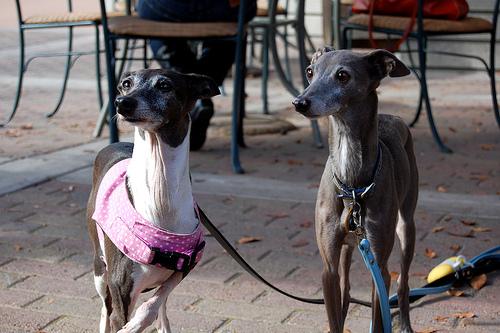
What is the Italian Greyhound?
The Italian Greyhound is a dog breed from Italy, descended from ancient Roman sighthounds with about 13 inches (33 cm) at withers tall, about up to 5 lbs (2.3 kg), a short, solid black, grey, or isabelline coat, and a typical lifespan of 14 years (median).
Italy, descended from ancient Roman sighthounds
14 years (median)
Up to 5 lbs (2.3 kg)
13 inches (33 cm) at withers
Short, solid black, grey, or isabelline
Slender legs, deep chest, long neck
What is the Italian Greyhound temperament?
Italian Greyhounds are delicate yet spirited companions with a surprising boldness for their tiny size.
These elegant sighthounds are devoted to their owners and thrive on affection and close companionship. They're intelligent and alert, with quick reflexes inherited from their hunting heritage, though they're equally content lounging on a lap. Despite their fragile appearance, they possess surprising athletic ability and enjoy short bursts of energetic play. Their sensitive nature means they respond best to gentle handling and positive reinforcement.
Where did the Italian Greyhound come from?
Italian Greyhounds have been cherished by European nobility and royalty for centuries, with evidence of similar dogs appearing in Roman art from the second century AD.
The breed became particularly fashionable during the Renaissance, favored by the Medici and D'Este families, and later by French kings and Frederick the Great. Formally recognized as 'Italian Greyhounds' in Britain during the 1870s, the breed nearly went extinct after World War II but was revived in the 1950s through dedicated Italian breeders. The Fédération Cynologique Internationale officially accepted the breed in 1956, and it has since become a beloved companion dog worldwide.
What health and care needs does the Italian Greyhound have?
Italian Greyhounds are remarkably healthy for their size, with a median lifespan of 14 years.
They are notably resistant to hip dysplasia, ranking as the least affected breed in orthopedic studies. Primary health concerns include congenital deafness and cervical intervertebral disc disease, both related to their neurological makeup. Their small, delicate frames require careful handling to prevent injuries.
Which breeds look similar to the Italian Greyhound?
The Italian Greyhound is useful to compare with Afghan Hound, Beagle, Black-and-tan Coonhound, and Bloodhound when practicing similar breed recognition.
How hard is the Italian Greyhound to recognize in BreedGuessr?
The Italian Greyhound gets easier to recognize in BreedGuessr when players focus on its Italy, descended from ancient Roman sighthounds origin, short, solid black, grey, or isabelline coat, and 13 inches (33 cm) at withers outline before choosing an answer.
BreedGuessr reinforces those clues with real dog photos, multiple-choice comparisons, and quick links back to breed guides before you play another round.
What makes the Italian Greyhound memorable?
A memorable Italian Greyhound fact is this: Italian Greyhounds were so prized by royalty that they appear in paintings by famous Renaissance artists like Giotto and Tiepolo.
- Italian Greyhounds were so prized by royalty that they appear in paintings by famous Renaissance artists like Giotto and Tiepolo.
- Despite weighing only 2-5 pounds, they were originally bred to hunt hare and rabbit with impressive speed and agility.
- The breed nearly vanished after World War II but was saved by Italian breeder Maria Luisa Incontri Lotteringhi della Stufa, who imported a crucial dog from Austria in 1951.
- They are the smallest of all sighthound breeds, yet retain the keen hunting instincts of their larger relatives.
- Italian Greyhounds have a distinctive high-stepping gait and are capable of surprisingly fast gallops for their tiny size.
- The breed was officially registered by the American Kennel Club starting in 1886, making them one of the earliest recognized toy breeds.
Source: Wikipedia. Image: Wikimedia Commons (CC BY-SA 3.0)