Keeshond
The Dutch Barge Dog
By BreedGuessr · Dog breed learning game maintainers · Published · Updated
What is the Keeshond?
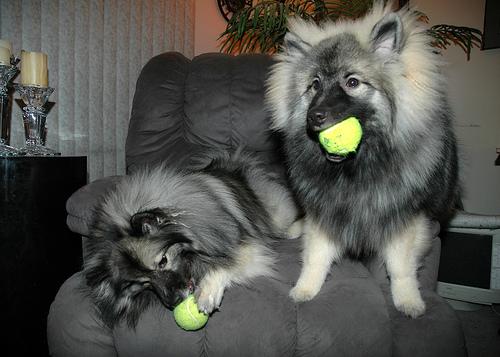
The Keeshond is a dog breed from Netherlands (Dutch Barge Dog) with about 17-18 inches tall, about 30-40 lbs, a dense double coat, silver and black coat, and a typical lifespan of 12-15 years.
Netherlands (Dutch Barge Dog)
12-15 years
17-18 inches
30-40 lbs
Dense double coat, silver and black
Tightly curled tail, fox-like ’spectacles’ markings
What is the Keeshond temperament?
Keeshonds are intelligent, alert, and remarkably affectionate companions with outgoing personalities that belie their medium size.
They're known for their expressive faces and keen awareness of their surroundings, making them excellent watchdogs despite their gentle nature. These dogs form strong bonds with their families and crave attention and companionship, thriving on interaction and mental stimulation. Their playful, spirited temperament makes them wonderful family pets who are equally happy cuddling on the couch or engaging in active play.
Where did the Keeshond come from?
Originally known as the Dutch Barge Dog, the Keeshond was a common sight on barges traveling Dutch canals and rivers during the 18th century.
The breed became a powerful symbol of the Patriot faction during the political turbulence preceding the French Revolution in the Netherlands. Systematic development of the breed occurred in England during the late 19th century using imported stock from both the Netherlands and Germany. The American Kennel Club recognized the Keeshond in 1930, solidifying its place in the modern dog fancy.
What health and care needs does the Keeshond have?
Keeshonds are generally healthy dogs with few breed-specific concerns, though like many spitz breeds, they can be prone to hip dysplasia and patellar luxation.
Their double coat requires regular maintenance and should never be shaved, as it provides essential insulation against both heat and cold. Responsible breeders test for common health issues, and their typical lifespan of 12-15 years is considered very good for a dog of their size.
Which breeds look similar to the Keeshond?
The Keeshond is useful to compare with Affenpinscher, Afghan Hound, African Hunting Dog, and Airedale when practicing similar breed recognition.
How hard is the Keeshond to recognize in BreedGuessr?
The Keeshond gets easier to recognize in BreedGuessr when players focus on its Netherlands (Dutch Barge Dog) origin, dense double coat, silver and black coat, and 17-18 inches outline before choosing an answer.
BreedGuessr reinforces those clues with real dog photos, multiple-choice comparisons, and quick links back to breed guides before you play another round.
What makes the Keeshond memorable?
A memorable Keeshond fact is this: Keeshonds have a distinctive 'spectacles' marking—delicate dark lines running from their eyes toward their ears that create their charming, expressive look.
- Keeshonds have a distinctive 'spectacles' marking—delicate dark lines running from their eyes toward their ears that create their charming, expressive look.
- The breed 'blows' its undercoat once yearly for males and twice for females, shedding excessively for about two weeks in a dramatic fur explosion.
- Their tightly curled tail is so compact that it should be indistinguishable from their body when viewed in profile—a hallmark of the spitz group.
- During the Dutch Golden Age, Keeshonds became such beloved family dogs that they were often depicted in Dutch paintings of the period.
- The breed's name comes from 'Kees,' a nickname for a Dutch Patriot leader whose dog became the symbol of the resistance movement.
- Male Keeshonds develop significantly thicker neck ruffs than females, making them appear more majestic and lion-like.
Source: Wikipedia. Image: Wikimedia Commons (CC BY-SA 3.0)