Kuvasz
Hungary’s Ancient Guardian
By BreedGuessr · Dog breed learning game maintainers · Published · Updated
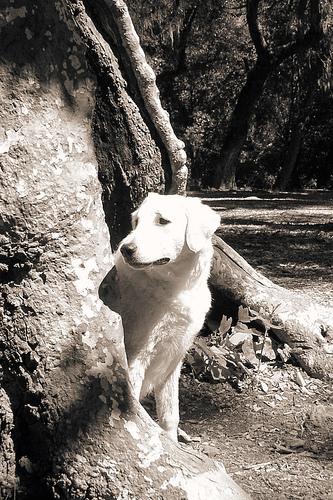
What is the Kuvasz?
The Kuvasz is a dog breed from Carpathian Basin, Hungary with about 28-30 inches (dogs), slightly less (bitches) tall, about 100-130 lbs (dogs), lighter (bitches), a white or ivory-white, thick and coarse coat, and a typical lifespan of 12-14 years.
Carpathian Basin, Hungary
12-14 years
28-30 inches (dogs), slightly less (bitches)
100-130 lbs (dogs), lighter (bitches)
White or ivory-white, thick and coarse
Large, powerful, with wedge-shaped head
What is the Kuvasz temperament?
Kuvaszok are fearless and intensely loyal guardian dogs with a strong protective instinct rooted in centuries of protecting livestock and royalty.
They are confident and independent thinkers, bred to make their own decisions while guarding, which means they're not blindly obedient but deeply devoted to their families. Despite their imposing size and serious demeanor, they can be affectionate with their people, though they remain naturally suspicious of strangers. Their protective nature means early socialization and training are essential, as they take their guardian role very seriously.
Where did the Kuvasz come from?
The Kuvasz originated in the Carpathian Basin, with the breed name likely derived from the Old Turkish word "Küvaz." In the 15th century, King Matthias Corvinus famously kept large numbers of Kuvaszok at his Hungarian court as guard dogs, hunting companions, and even war dogs, establishing their royal status.
Selective breeding began in the late 19th century, leading to FCI recognition in 1934 (full acceptance 1954). Tragically, the breed nearly faced extinction during World War II when German and Soviet soldiers actively hunted them down, appreciating both their protective capabilities and taking them as prizes; fewer than 30 (possibly only 12) survived in Hungary.
What health and care needs does the Kuvasz have?
The Kuvasz is generally a healthy and robust breed, though they are prone to developmental bone problems that should be monitored.
Regular veterinary care and proper nutrition during their growth phase are important to support their large frame. As with many large breeds, hip and elbow dysplasia can be concerns, so working with responsible breeders who health-test their stock is recommended.
Which breeds look similar to the Kuvasz?
The Kuvasz is useful to compare with Affenpinscher, Afghan Hound, African Hunting Dog, and Airedale when practicing similar breed recognition.
How hard is the Kuvasz to recognize in BreedGuessr?
The Kuvasz gets easier to recognize in BreedGuessr when players focus on its Carpathian Basin, Hungary origin, white or ivory-white, thick and coarse coat, and 28-30 inches (dogs), slightly less (bitches) outline before choosing an answer.
BreedGuessr reinforces those clues with real dog photos, multiple-choice comparisons, and quick links back to breed guides before you play another round.
What makes the Kuvasz memorable?
A memorable Kuvasz fact is this: The Kuvasz was so feared by German and Soviet soldiers in WWII for its protective abilities that they were actively hunted and nearly driven to extinction.
- The Kuvasz was so feared by German and Soviet soldiers in WWII for its protective abilities that they were actively hunted and nearly driven to extinction.
- King Matthias Corvinus of Hungary kept large packs of Kuvaszok in the 15th century, making them one of history's most elite guard dogs.
- The breed's near-extinction after WWII was so severe that breeders may have crossed them with Great Pyrenees to rebuild the population, changing the breed's genetic makeup.
- In Romania, breed-specific laws require Kuvaszok to be muzzled in public places due to their powerful guardian instincts.
- Despite being flock guardians, the Kuvasz has slate-grey skin under its white coat, with black nose leather and paw pads.
- The breed has been a symbol of Hungarian national pride and appears in references dating back to medieval Hungarian texts.
Source: Wikipedia. Image: Wikimedia Commons (CC BY-SA 3.0)