Malamute
The Arctic Freight Hauler
By BreedGuessr · Dog breed learning game maintainers · Published · Updated
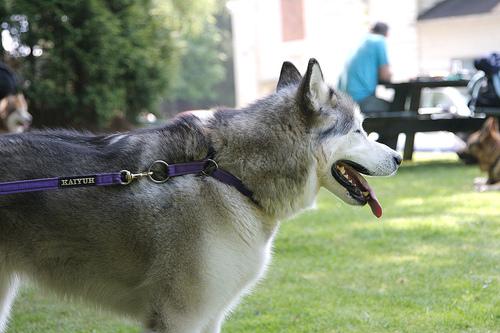
What is the Malamute?
The Malamute is a dog breed from Alaska (Malimiut Inupiaq people, Norton Sound region) with about 23-25 inches (females), 25-28 inches (males) tall, about 75-100 lbs (females), 85-110 lbs (males), a double-coated with thick, oily undercoat and coarse guard coat coat, and a typical lifespan of 10-12 years.
Alaska (Malimiut Inupiaq people, Norton Sound region)
10-12 years
23-25 inches (females), 25-28 inches (males)
75-100 lbs (females), 85-110 lbs (males)
Double-coated with thick, oily undercoat and coarse guard coat
Grey, sable, black, seal, or red with white markings
What is the Malamute temperament?
Alaskan Malamutes are powerful, determined dogs bred for strength and endurance rather than speed.
They are friendly and affectionate with their families, displaying a loyal and dignified nature despite their imposing size. These intelligent giants require experienced handlers and thrive with consistent training and plenty of physical activity. They have a pack mentality and can be stubborn, demanding owners who understand their working dog heritage and can provide firm, fair leadership.
Where did the Malamute come from?
The Alaskan Malamute was developed by the Malimiut Inupiaq people of Alaska's Norton Sound region, with ancestral roots tracing back to Siberian sled dogs that arrived with Paleo-Eskimo peoples 4,500 years ago.
Genetic studies confirm the breed shares a close relationship with Siberian Huskies and ancient Chukotka sled dogs, with DNA evidence linking them to dogs from 9,500 years ago. The breed became formalized as a distinct type in the 19th century, gaining recognition by the American Kennel Club for its exceptional hauling ability and power.
What health and care needs does the Malamute have?
Alaskan Malamutes are generally robust but can be prone to hip dysplasia and other joint issues due to their large size and heavy build.
Ear infections may occur due to their small, erect ears. Owners should monitor for bloat and maintain regular veterinary checkups, especially as they age.
Which breeds look similar to the Malamute?
The Malamute is useful to compare with Affenpinscher, Afghan Hound, African Hunting Dog, and Airedale when practicing similar breed recognition.
How hard is the Malamute to recognize in BreedGuessr?
The Malamute gets easier to recognize in BreedGuessr when players focus on its Alaska (Malimiut Inupiaq people, Norton Sound region) origin, double-coated with thick, oily undercoat and coarse guard coat coat, and 23-25 inches (females), 25-28 inches (males) outline before choosing an answer.
BreedGuessr reinforces those clues with real dog photos, multiple-choice comparisons, and quick links back to breed guides before you play another round.
What makes the Malamute memorable?
A memorable Malamute fact is this: Alaskan Malamutes have snowshoe feet—large, compact paws perfectly designed for traction in snow and ice.
- Alaskan Malamutes have snowshoe feet—large, compact paws perfectly designed for traction in snow and ice.
- The breed can weigh over 150 pounds, making them significantly heavier and more powerful than the faster Siberian Husky.
- Their double coat sheds profusely, with undercoats as thick as two inches that provide exceptional insulation in Arctic conditions.
- Purebred Alaskan Malamutes will never have blue eyes; their eyes are always shades of brown.
- The breed name comes from the Malimiut Inupiaq people, an Alaskan indigenous group who selectively bred these dogs for centuries.
- They were originally bred for hauling heavy freight across frozen terrain, not for racing—a key distinction from Siberian Huskies.
Source: Wikipedia. Image: Wikimedia Commons (CC BY-SA 3.0)