Norwegian Elkhound
Norway’s Fearless Elk Hunter
By BreedGuessr · Dog breed learning game maintainers · Published · Updated
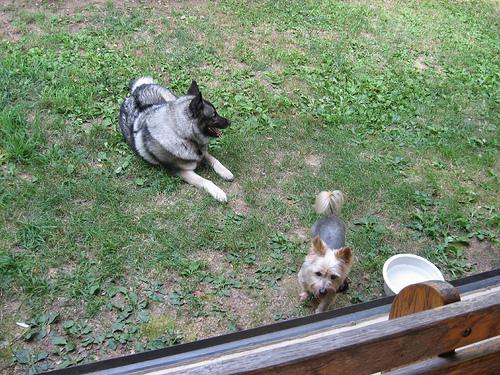
What is the Norwegian Elkhound?
The Norwegian Elkhound is a dog breed from Norway with about 19–21 inches tall, about 44–51 lbs (20–23 kg), a coarse, double-layered, grey/black/white coat, and a typical lifespan of 12.9 years.
Norway
12.9 years
44–51 lbs (20–23 kg)
19–21 inches
Coarse, double-layered, grey/black/white
Tightly curled over back
What is the Norwegian Elkhound temperament?
Norwegian Elkhounds are bold, intelligent hunters with fierce loyalty to their pack.
They bond deeply with their families and make excellent watchdogs, thanks to their characteristic sharp, loud bark. Naturally independent and playful, they're boisterous at times but rank above average in working intelligence. These hardy dogs thrive with proper attention and make wonderful family companions despite their strong-willed nature.
Where did the Norwegian Elkhound come from?
The Norwegian Elkhound is the National Dog of Norway and falls within a unique mitochondrial DNA lineage that originated 480–3,000 years ago from wolf-dog hybridization in northern Scandinavia.
The breed was first formally presented at a dog exhibition in Norway in 1877, solidifying its status as a recognized breed. Historically bred to independently track and hold elk and large game like bears and wolves at bay, it represents a distinctly Scandinavian hunting heritage shared with related Sami dog breeds.
What health and care needs does the Norwegian Elkhound have?
A 2024 UK study found Norwegian Elkhounds have a life expectancy of 12.9 years, slightly above the purebred average.
The breed is prone to primary renal glucosuria, an inherited kidney condition affecting glucose reabsorption, and is predisposed to progesterone-related forms of diabetes mellitus. Inherited chondrodysplasia has also been documented in the breed, so health screening is important.
Which breeds look similar to the Norwegian Elkhound?
The Norwegian Elkhound is useful to compare with Afghan Hound, Beagle, Black-and-tan Coonhound, and Bloodhound when practicing similar breed recognition.
How hard is the Norwegian Elkhound to recognize in BreedGuessr?
The Norwegian Elkhound gets easier to recognize in BreedGuessr when players focus on its Norway origin, coarse, double-layered, grey/black/white coat, and 19–21 inches outline before choosing an answer.
BreedGuessr reinforces those clues with real dog photos, multiple-choice comparisons, and quick links back to breed guides before you play another round.
What makes the Norwegian Elkhound memorable?
A memorable Norwegian Elkhound fact is this: Norwegian Elkhounds rank 36th in canine intelligence and demonstrate above-average working and obedience abilities.
- Norwegian Elkhounds rank 36th in canine intelligence and demonstrate above-average working and obedience abilities.
- The breed has a unique hunting technique where it barks loudly to distract and hold elk at bay, signaling hunters to its location.
- Their distinctive tightly curled tail is a breed standard and considered ideal in dog shows.
- Norwegian Elkhounds can hunt silently on a leash, using keen scenting ability to lead hunters toward game without barking.
- The breed's mitochondrial DNA is found only in northern Scandinavia and includes a rare maternal wolf sequence never matched elsewhere in Eurasia.
- They were originally used to hunt large predators like wolves and bears, not just elk.
Source: Wikipedia. Image: Wikimedia Commons (CC BY-SA 3.0)