Saint Bernard
The Alpine Rescue Legend
By BreedGuessr · Dog breed learning game maintainers · Published · Updated
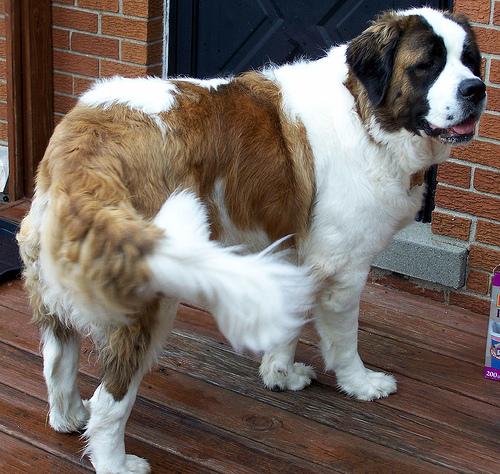
What is the Saint Bernard?
The Saint Bernard is a dog breed from Western Alps, Italy & Switzerland (1660s) with a smooth, close and flat coat and a typical lifespan of 8-10 years.
Western Alps, Italy & Switzerland (1660s)
8-10 years
Giant breed
Smooth, close and flat
White with red/reddish-brown patches
Long, heavy tail; strong build
What is the Saint Bernard temperament?
Saint Bernards are gentle giants with a calm, patient demeanor that makes them beloved family companions despite their imposing size.
They possess a remarkable natural instinct for rescue and assistance, traits that were never formally trained but passed down through generations by apprenticing younger dogs to experienced rescuers. Their laid-back temperament belies their incredible strength and endurance—they're content lounging at home yet always alert and ready to help. These dogs form deep bonds with their families and are known for their intuitive understanding of when someone needs comfort or support.
Where did the Saint Bernard come from?
The Saint Bernard was developed by monks at the Great St.
Bernard Hospice in the Western Alps, with documented records dating back to 1707, though paintings from 1690 suggest earlier origins. Named after the Alpine monk Saint Bernard of Menthon, these dogs became legendary for their mountain rescues, with the most famous dog, Barry, credited with saving between 40 and 100 lives during the treacherous alpine winters. In the 1850s, severe avalanches devastated the breeding population, prompting monks to crossbreed surviving Saint Bernards with Newfoundlands to preserve the breed—a decision that ironically increased their size and coat length, making them less effective as working dogs. The breed was officially recognized in Switzerland's Stud Book in 1884 and became a Swiss national dog.
What health and care needs does the Saint Bernard have?
Saint Bernards have a relatively short lifespan of 8-10 years compared to smaller breeds, a common concern in giant dog breeds.
Their large size predisposes them to hip dysplasia and heart conditions, requiring regular veterinary monitoring and careful breeding practices. The breed's thick coat demands consistent grooming and they are prone to heat sensitivity, making them unsuitable for hot climates.
Which breeds look similar to the Saint Bernard?
The Saint Bernard is useful to compare with Affenpinscher, Afghan Hound, African Hunting Dog, and Airedale when practicing similar breed recognition.
How hard is the Saint Bernard to recognize in BreedGuessr?
The Saint Bernard gets easier to recognize in BreedGuessr when players focus on its Western Alps, Italy & Switzerland (1660s) origin and smooth, close and flat coat before choosing an answer.
BreedGuessr reinforces those clues with real dog photos, multiple-choice comparisons, and quick links back to breed guides before you play another round.
What makes the Saint Bernard memorable?
A memorable Saint Bernard fact is this: Barry, the most famous Saint Bernard, had his preserved body displayed in the Natural History Museum in Bern and is memorialized with a statue in a dog cemetery.
- Barry, the most famous Saint Bernard, had his preserved body displayed in the Natural History Museum in Bern and is memorialized with a statue in a dog cemetery.
- Original Saint Bernards were about the size of German Shepherds, but grew significantly larger through selective breeding for appearance in dog shows rather than working ability.
- The monks never formally trained these dogs—younger dogs learned rescue techniques by watching and apprenticing with experienced rescuers.
- During World War I, Saint Bernards served with the Red Cross, carrying supplies to troops across inaccessible mountain terrain where mules and horses could not go.
- The breed's long fur, inherited from Newfoundland crossbreeding, actually made them less effective at rescues because it would freeze in alpine snow and weigh them down.
- The Swiss Saint Bernard Club, founded in 1884, was the first breed to be entered into the Swiss Stud Book.
Source: Wikipedia. Image: Wikimedia Commons (CC BY-SA 3.0)