Silky Terrier
Australia’s Silky Companion
By BreedGuessr · Dog breed learning game maintainers · Published · Updated
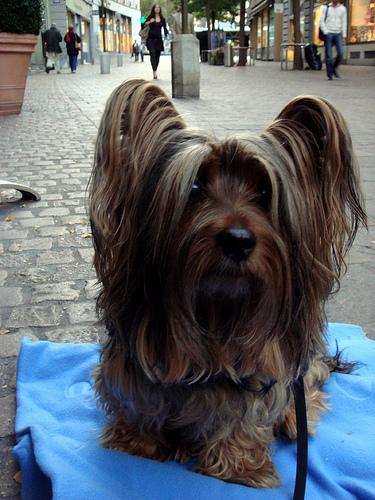
What is the Silky Terrier?
The Silky Terrier is a dog breed from Sydney, Australia (late 19th century) with about 9-10 inches at withers tall, about 8-10 lbs, a long, silky grey & white or blue & tan coat, and a typical lifespan of 12-15 years.
Sydney, Australia (late 19th century)
12-15 years
9-10 inches at withers
8-10 lbs
Long, silky grey & white or blue & tan
Compact, slightly longer than tall
What is the Silky Terrier temperament?
Despite their delicate appearance, Silky Terriers pack the spirited, confident personality of their terrier ancestors.
These alert and active little dogs are fearless hunters with big personalities—historically used for killing snakes and rodents in Australia, they retain that bold hunting instinct despite their toy-sized frame. They're devoted companions that bond strongly with their families, combining terrier tenacity with companion dog affection. Their small, catlike feet and graceful movements belie a scrappy, determined nature that can be surprisingly spirited and independent.
Where did the Silky Terrier come from?
The Silky Terrier emerged in late 19th-century Sydney when breeders crossed Yorkshire Terriers with Australian Terriers, creating a distinct breed from these conflicting lineages.
Originally called the Sydney Silky, the breed remained loosely defined until 1929—so loosely that three different terrier breeds could be born in the same litter and separated only by appearance as they grew. The breed achieved official recognition by the Australian National Kennel Council in 1958, and gained international fame after World War II when American servicemen stationed in Australia brought Silkies home; newspaper photos in 1954 sparked such enthusiasm that hundreds were imported to the United States, leading to AKC recognition in 1959.
What health and care needs does the Silky Terrier have?
Silky Terriers are generally hardy little dogs with few breed-specific health issues.
As with many small breeds, patellar luxation and dental problems can occur, so regular veterinary care and dental hygiene are important. Their silky coat requires consistent grooming to prevent matting and maintain skin health.
Which breeds look similar to the Silky Terrier?
The Silky Terrier is useful to compare with Airedale, American Staffordshire Terrier, Australian Terrier, and Bedlington Terrier when practicing similar breed recognition.
How hard is the Silky Terrier to recognize in BreedGuessr?
The Silky Terrier gets easier to recognize in BreedGuessr when players focus on its Sydney, Australia (late 19th century) origin, long, silky grey & white or blue & tan coat, and 9-10 inches at withers outline before choosing an answer.
BreedGuessr reinforces those clues with real dog photos, multiple-choice comparisons, and quick links back to breed guides before you play another round.
What makes the Silky Terrier memorable?
A memorable Silky Terrier fact is this: The breed was almost impossible to distinguish from Australian Terriers and Yorkshire Terriers until breed standards were formally established in 1929—littermates could be classified as three different breeds.
- The breed was almost impossible to distinguish from Australian Terriers and Yorkshire Terriers until breed standards were formally established in 1929—littermates could be classified as three different breeds.
- Silky Terriers earned their reputation by hunting and killing venomous snakes in Australia, making them brave snake-hunters despite weighing only 8-10 pounds.
- The breed's silky coat is so fine and glossy that it can only be maintained with regular grooming, making these glamorous lap dogs more high-maintenance than they appear.
- Their small, catlike feet are a distinctive breed feature that helps them move with surprising grace and agility for such a tiny terrier.
- American servicemen brought the first Silky Terriers to the United States after World War II, and a single 1954 newspaper photo caused such a popularity surge that hundreds were imported from Australia.
Source: Wikipedia. Image: Wikimedia Commons (CC BY-SA 3.0)