Tibetan Mastiff
The Himalayan Guardian
By BreedGuessr · Dog breed learning game maintainers · Published · Updated
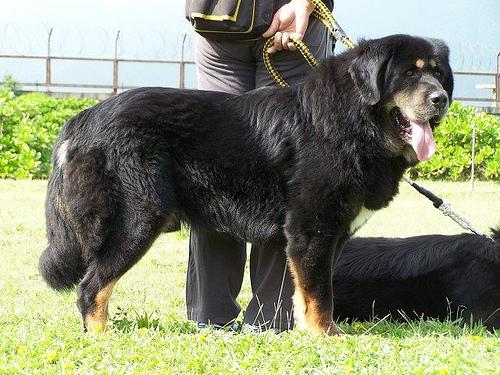
What is the Tibetan Mastiff?
The Tibetan Mastiff is a dog breed from Tibet, Himalayas with about 26-28+ inches (large breed) tall, about males 40-70 kg, females 30-55 kg, a double, long, dense; black, red, tan, or gray coat, and a typical lifespan of 10-14 years.
Tibet, Himalayas
10-14 years
Males 40-70 kg, Females 30-55 kg
Double, long, dense; black, red, tan, or gray
26-28+ inches (large breed)
Independent, protective, nocturnal guardian
What is the Tibetan Mastiff temperament?
The Tibetan Mastiff is a fiercely independent and intelligent guardian bred for centuries to protect livestock in harsh mountain terrain.
Aloof and reserved with strangers, they form deep bonds with their family and are naturally nocturnal, often sleeping during the day to remain alert and vigilant at night. These powerful, stubborn dogs are not for apartment living—they thrive in spacious yards and require experienced owners who understand their strong will. Despite their intimidating presence, well-socialized Mastiffs can be surprisingly gentle with their pack, though their instinct to bark at unfamiliar sounds makes them ideal sentries but challenging neighbors.
Where did the Tibetan Mastiff come from?
The Tibetan Mastiff is an ancient landrace breed that evolved over centuries in the high-altitude regions of Tibet, Ladakh, and the Himalayas, where it served as the primary guardian of livestock against predators like snow leopards and wolves.
Western visitors to Tibet in the 19th century misnamed the breed 'mastiff' because Europeans used that term for all large dog breeds, though the more accurate name would be 'Tibetan Mountain Dog' or 'Himalayan Mountain Dog.' The breed's remarkable adaptation to mountain life includes a single breeding season per year—a trait it shares with wild canids like wolves—ensuring puppies are born between December and January when conditions are optimal. Through hundreds of years of selective breeding for protective and guardian qualities, the breed became prized across Asia and eventually gained international recognition through Western breeding programs.
What health and care needs does the Tibetan Mastiff have?
Tibetan Mastiffs are generally hardy dogs adapted to extreme high-altitude conditions, but they require careful management in warmer climates due to their thick double coat.
Hip dysplasia and elbow dysplasia are concerns in the breed, and prospective owners should seek health-tested parents. Their unique reproductive cycle and potential for dramatic coat changes after sterilization should be considered before breeding or spaying decisions.
Which breeds look similar to the Tibetan Mastiff?
The Tibetan Mastiff is useful to compare with Bull Mastiff, Great Dane, Affenpinscher, and Afghan Hound when practicing similar breed recognition.
How hard is the Tibetan Mastiff to recognize in BreedGuessr?
The Tibetan Mastiff gets easier to recognize in BreedGuessr when players focus on its Tibet, Himalayas origin, double, long, dense; black, red, tan, or gray coat, and 26-28+ inches (large breed) outline before choosing an answer.
BreedGuessr reinforces those clues with real dog photos, multiple-choice comparisons, and quick links back to breed guides before you play another round.
What makes the Tibetan Mastiff memorable?
A memorable Tibetan Mastiff fact is this: Unlike most dogs, Tibetan Mastiffs have only one breeding season per year, occurring in late autumn—a trait shared with wild wolves and other wild animals.
- Unlike most dogs, Tibetan Mastiffs have only one breeding season per year, occurring in late autumn—a trait shared with wild wolves and other wild animals.
- Their distinctive double coat naturally sheds dirt and odors, and they lack the unpleasant 'big dog smell' that affects many large breeds.
- Tibetan Mastiffs are nocturnal sentries by nature, sleeping most of the day and becoming highly active and alert at night to guard against predators.
- A single Tibetan Mastiff puppy once sold for $1.95 million in China, making it one of the most expensive dog breeds ever recorded.
- The breed is shown under different standards depending on region—some Indian breed standards separate them into 'Lion Head' (with a distinctive mane) and 'Tiger Head' varieties.
- Their stubborn independence means traditional obedience training is only mildly successful, as they were bred to make autonomous decisions while guarding livestock alone.
Source: Wikipedia. Image: Wikimedia Commons (CC BY-SA 3.0)