Toy Terrier
The Elegant Victorian Ratter
By BreedGuessr · Dog breed learning game maintainers · Published · Updated
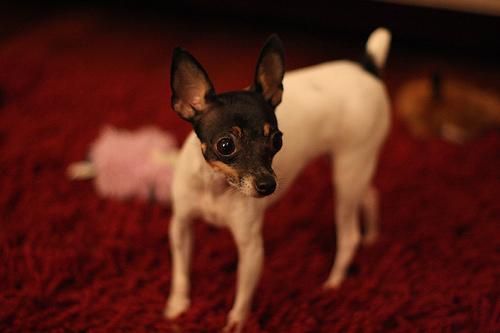
What is the Toy Terrier?
The Toy Terrier is a dog breed from England, developed from Old English Black and Tan Terrier with about 10-11 inches tall, about 3-6 pounds, a short, glossy black with tan markings coat, and a typical lifespan of 12-15 years.
England, developed from Old English Black and Tan Terrier
12-15 years
10-11 inches
3-6 pounds
Short, glossy black with tan markings
Distinctive candle-flame shaped, erect prick ears
What is the Toy Terrier temperament?
English Toy Terriers are spirited, confident little hunters with a bold personality that belies their tiny size.
These elegant dogs are alert and energetic, displaying the tenacity and prey drive typical of terriers despite their delicate appearance. They form strong bonds with their owners and thrive on attention and interaction, making them loving companions for the right household. Their lively nature and intelligence make them surprisingly trainable, though they maintain an independent streak. These pint-sized dynamos have big personalities and bring endless entertainment to their families.
Where did the Toy Terrier come from?
Developed from the Old English Black and Tan Terrier during Victorian England, the English Toy Terrier's origins lie in the competitive rat pits of London, where terriers were famously pitted against rats for gambling sport.
The breed was refined through selective breeding to create smaller and smaller dogs capable of killing rats at remarkable speeds—one legendary dog named Tiny the Wonder killed 200 rats in under an hour in 1848. When rat pitting was outlawed coinciding with the formation of the Kennel Club, the breed transitioned from pit dog to elegant show dog, earning its refined appearance and reputation. The breed was officially named the English Toy Terrier (Black & Tan) in 1960, becoming a cherished Victorian-era legacy.
What health and care needs does the Toy Terrier have?
The English Toy Terrier is generally a hardy breed, though like many toy breeds, it can be prone to patellar luxation (knee issues) and dental problems due to its small jaw.
Responsible breeding and regular veterinary care are important for maintaining the breed's health and genetic diversity. The breed remains on the UK Kennel Club's vulnerable native breeds list with fewer than 100 puppies registered annually, making careful breeding practices essential.
Which breeds look similar to the Toy Terrier?
The Toy Terrier is useful to compare with Airedale, American Staffordshire Terrier, Australian Terrier, and Bedlington Terrier when practicing similar breed recognition.
How hard is the Toy Terrier to recognize in BreedGuessr?
The Toy Terrier gets easier to recognize in BreedGuessr when players focus on its England, developed from Old English Black and Tan Terrier origin, short, glossy black with tan markings coat, and 10-11 inches outline before choosing an answer.
BreedGuessr reinforces those clues with real dog photos, multiple-choice comparisons, and quick links back to breed guides before you play another round.
What makes the Toy Terrier memorable?
A memorable Toy Terrier fact is this: A dog named Tiny the Wonder killed 200 rats in less than an hour in 1848, setting a legendary record in Victorian rat pits.
- A dog named Tiny the Wonder killed 200 rats in less than an hour in 1848, setting a legendary record in Victorian rat pits.
- The breed's distinctive ears are called 'candle-flame' shaped because they resemble the flickering point of a candle flame.
- English Toy Terriers move with the extended trot of a horse, a distinctive gait that's part of their official breed standard.
- The breed was nearly extinct in North America until the Kennel Club reopened the stud book in recent years to include Toy Manchester Terriers.
- They weigh just 3-6 pounds but pack the fearless hunter mentality of much larger terriers.
- The breed originated from competitive dog sports in Victorian London but transformed into elegant show dogs once rat pitting was outlawed.
Source: Wikipedia. Image: Wikimedia Commons (CC BY-SA 3.0)