Welsh Springer Spaniel
Wales’ Red and White Hunter
By BreedGuessr · Dog breed learning game maintainers · Published · Updated
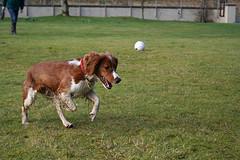
What is the Welsh Springer Spaniel?
The Welsh Springer Spaniel is a dog breed from Wales, United Kingdom with about 18-20 inches tall, about 40-55 pounds, a red and white (piebald pattern) coat, and a typical lifespan of 12-15 years.
Wales, United Kingdom
12-15 years
18-20 inches
40-55 pounds
Red and white (piebald pattern)
Loyal, affectionate, working hunter
What is the Welsh Springer Spaniel temperament?
Welsh Springer Spaniels are deeply loyal and affectionate dogs that form strong bonds with their families, though they tend to be wary of strangers.
As working hunters by breeding, they possess keen intelligence and a drive to work, making them active and engaged companions. Despite their hunting heritage, they're gentle and devoted family members who thrive on close human connection and can become quite attached to their loved ones. Their reserved nature with unfamiliar people balances their warm family demeanor, making them both excellent companions and reliable working dogs.
Where did the Welsh Springer Spaniel come from?
The Welsh Springer Spaniel's origins trace back to the Land Spaniels depicted in old pictures and prints, with John Caius describing red and white spaniels as early as 1570.
These dogs were preserved in pure form by Welsh sportsmen and hunters in the valleys of Wales, originally used to spring game for falcon hunters under the name Welsh Starter. The breed remained relatively obscure through the 19th century until 1900, when Mr. A. T. Williams's kennel won the Sporting Spaniel Club Trials and dominated competitions for years, proving their exceptional working ability. The Kennel Club officially recognized the breed in 1902 under the name Welsh Springer Spaniel, distinguishing them from their English counterparts with whom they had previously been confused.
What health and care needs does the Welsh Springer Spaniel have?
Welsh Springer Spaniels are generally healthy dogs with limited breed-specific health concerns, though they are affected more frequently than average by hip dysplasia and certain eye conditions.
Regular health screening and responsible breeding practices help minimize these issues. Prospective owners should obtain health clearances from reputable breeders and maintain regular veterinary care.
Which breeds look similar to the Welsh Springer Spaniel?
The Welsh Springer Spaniel is useful to compare with Blenheim Spaniel, Brittany Spaniel, Cocker Spaniel, and English Springer when practicing similar breed recognition.
How hard is the Welsh Springer Spaniel to recognize in BreedGuessr?
The Welsh Springer Spaniel gets easier to recognize in BreedGuessr when players focus on its Wales, United Kingdom origin, red and white (piebald pattern) coat, and 18-20 inches outline before choosing an answer.
BreedGuessr reinforces those clues with real dog photos, multiple-choice comparisons, and quick links back to breed guides before you play another round.
What makes the Welsh Springer Spaniel memorable?
A memorable Welsh Springer Spaniel fact is this: Their distinctive red and white coat pattern was once common in English spaniels but had completely died out by the early 20th century.
- Their distinctive red and white coat pattern was once common in English spaniels but had completely died out by the early 20th century.
- Welsh Springers were sometimes registered with the Kennel Club as 'Cockers,' and the terms 'Welsh Cocker' and 'Welsh Springer' were used interchangeably during the 19th century.
- Mr. A. T. Williams's champion dog Corrin was the first Welsh Springer Spaniel to be photographed, becoming the breed's first documented show star in 1903.
- The breed was also historically called the 'Welsh Starter' because they were trained to spring game for hunters using falcons.
- Welsh Springers remained relatively unknown until a series of trial victories in 1900 suddenly made them famous throughout the United Kingdom.
- They are rarer than English Springer Spaniels and are often confused with them, despite being a distinct breed recognized since 1902.
Source: Wikipedia. Image: Wikimedia Commons (CC BY-SA 3.0)