West Highland White Terrier
Scotland’s Spirited White Terrier
By BreedGuessr · Dog breed learning game maintainers · Published · Updated
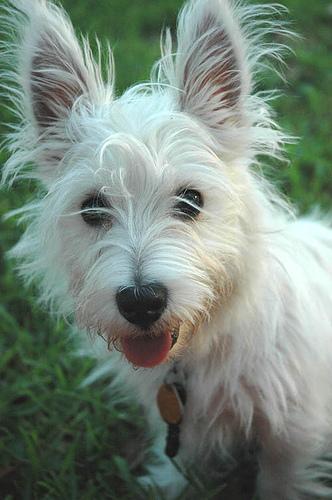
What is the West Highland White Terrier?
The West Highland White Terrier is a dog breed from Scotland, 1908 with about 10-11 inches tall, about 15-20 lbs, a double coat, pure white coat, and a typical lifespan of 12-16 years.
Scotland, 1908
12-16 years
15-20 lbs
10-11 inches
Double coat, pure white
Intelligent, energetic, independent
What is the West Highland White Terrier temperament?
Westies are intelligent, quick learners with a confident and self-assured personality.
They're highly social and friendly, making them the friendliest of all Scottish terriers, though they can be stubborn and prefer handling with respect—rough play isn't tolerated. Originally bred to hunt rodents on farms, they remain energetic and boisterous with a strong prey drive, requiring at least an hour of daily exercise. While loyal and bonded to their owners, they're fiercely independent and can be possessive of food and toys, making early training essential.
Where did the West Highland White Terrier come from?
The West Highland White Terrier descends from 19th-century Scottish white terrier breeding programs.
Edward Donald Malcolm, 16th Laird of Poltalloch, is credited with developing the modern breed from his Poltalloch Terrier, though he famously didn't want it bearing his name. The breed is a cousin of the Cairn Terrier and related to the Roseneath and Pittenweem Terriers. The Westie received its modern name in 1908 and was recognized by major kennel clubs shortly after, eventually becoming one of the most popular breeds in the United Kingdom and consistently ranking in the top third of American breeds since the 1960s.
What health and care needs does the West Highland White Terrier have?
Westies are prone to craniomandibular osteopathy, commonly called "Westie jaw," a condition in young dogs causing abnormal bone growth in the jaw.
The breed is also susceptible to skin disorders, including the breed-specific hyperplastic dermatosis. Regular veterinary check-ups and responsible breeding practices help manage these hereditary health concerns.
Which breeds look similar to the West Highland White Terrier?
The West Highland White Terrier is useful to compare with Airedale, American Staffordshire Terrier, Australian Terrier, and Bedlington Terrier when practicing similar breed recognition.
How hard is the West Highland White Terrier to recognize in BreedGuessr?
The West Highland White Terrier gets easier to recognize in BreedGuessr when players focus on its Scotland, 1908 origin, double coat, pure white coat, and 10-11 inches outline before choosing an answer.
BreedGuessr reinforces those clues with real dog photos, multiple-choice comparisons, and quick links back to breed guides before you play another round.
What makes the West Highland White Terrier memorable?
A memorable West Highland White Terrier fact is this: Westie puppies are born with pink noses and paw pads that gradually turn black as they mature.
- Westie puppies are born with pink noses and paw pads that gradually turn black as they mature.
- Their paws are slightly turned outward, giving them superior grip on rocky terrain compared to flat-footed breeds.
- The modern breed was named in 1908, but the Poltalloch Terrier—their ancestor—existed decades earlier.
- Edward Donald Malcolm deliberately didn't want his name attached to the breed despite creating it.
- Westies require hand-stripping to maintain their show coat, a grooming technique that removes dead hair by hand rather than clipping.
- They're the most friendly of all Scottish terrier breeds despite their independent and sometimes stubborn nature.
Source: Wikipedia. Image: Wikimedia Commons (CC BY-SA 3.0)